J.GARDEN: the importance of doujin events on the BL ecosystem

J.GARDEN was this past Sunday here in Tokyo, and our boss was kind enough to let us go as a work exploration!

What is J.GARDEN, you ask? Often shortened to J庭, or J-niwa—the Japanese word for garden, unsurprisingly—J.GARDEN is the twice-yearly original-only BL doujinshi event! It happens in the fall and spring, and has grown out of its original hall to house over 1000 tables. According to the J.GARDEN website, the event started in 1996 and has been going strong ever since, with this past Sunday’s being the 54th event, and the 55th already deep into the planning stages. (If you’re a long-time fan of BL manga and its deep lore, I highly recommend checking out all the past flyer and pamphlet art on the J.GARDEN history page. Truly stunning testament to the popular mangaka and art styles of the different time periods.)

J.GARDEN used to take place in the exhibition hall at Ikebukuro’s Sunshine City. For those who don’t know, Ikebukuro is a very important place to fujoshi, as it’s also the home of Otome Road. We hope to do a long-form explanation of Otome Road at some point, but until then, here‘s the Wikipedia article explaining it. The tl;dr is that there are many stores, restaurants, event halls, etc. in a very small stretch of Tokyo dedicated to female otaku, and is often seen as “Akihabara ~for her~” (though there are actually many male BL and otome fans who openly visit these places as well). In more recent years, however, J.GARDEN has been held exclusively at Tokyo Big Sight—an incredibly important otaku landmark some of you may know from tales of Comiket.

J.GARDEN is interesting because it’s a mix of old and new, big names and small fish, from all walks of life. There may be artists as huge and famous as Fumi Yoshinaga, but your favorite book purchased at the event may well be by someone you’ve never heard of before that you bought on a whim. It’s a chance for fans and creators to meet, and just be in a huge hall with others who sincerely love original BL.

While we plan on releasing a full report on our J.GARDEN experience later in the week, for now I interviewed a friend who has attended and participated in multiple J.GARDEN events and hopes to break into the original BL market. For those interested in the indie sector of BL, and what it’s like as a fan and a foreigner to make moves in the Japanese BL industry, please read on!

Continue reading “J.GARDEN: the importance of doujin events on the BL ecosystem”
The Benefits and Drawbacks of Digital-Only Publishing

Good morning from Tokyo! I was originally planning on writing a review for this week, but the end of September has been a bit more hectic than expected, so instead I have a casual post about what it’s like to be a digital-only publisher, and the benefits and drawbacks therein.

When I was younger (like, late teens to early 20s) I must admit: I did not like digital publishing. I wanted a hard copy of all my books—and I mean all of them. When I still lived in the United States, I actually used to have the largest IKEA Kallax shelf—the one that’s five squares across and five high—situated in the middle of my room so I could use both sides, and I had the whole thing literally filled with books (mostly BL). Thousands and thousands of books. I hated the idea of digital manga because it felt like a ripoff. I wanted the physical book, in my hands, so I could do whatever I wished with it.

However, one thing you learn when you grow up and move—particularly overseas—is that you don’t want a lot of stuff. You can’t have a lot of stuff. It’s unfortunately just not possible to have so much stuff. Not only that, but apartments in Tokyo are incredibly small unless you’re unbelievably wealthy (or live inconveniently far from a station), so even if I could have afforded to bring all thousands of those BL back to Japan with me, I wouldn’t have the space for them.

Sadly, when I returned to the U.S. to clean out my childhood bedroom and decide what could and couldn’t come back to Japan with me, all but around 30 of those books had to be recycled. Soul-crushing, honestly.

So, needless to say, I had to make peace with the fact that I would be deciding between just not getting to read a lot of BL, having to read it and then sell it back (which is also a hassle, especially when you don’t have a car), or just… buying digitally, at which point I could have as many books as I wanted but also enough space left over in my apartment to eat meals, exercise, and play with my cat. And then I got a job at a digital publisher, and came to really understand that digital publishing for manga localization actually has a lot of benefits—though also, some clear drawbacks.

Continue reading “The Benefits and Drawbacks of Digital-Only Publishing”

Japanese for NERDS: Oshikatsu, Otakatsu, BLkatsu, and language

As you may have seen from my posts, I like to sprinkle in a lot of Japanese to help people learn and contextualize the language and culture a majority of our content comes from. While we’re a localization company, I know a lot of people who read manga do intend on eventually learning and hopefully mastering Japanese someday, whether it’s in order to not have to rely on English licenses to get that sweet, sweet content, or even just to be able to comfortably follow Japanese mangaka, publishers, or fan accounts, and it can be helpful to learn bit by bit through your hobbies.

Still in the process of my own Japanese-learning journey (I think most language learning never actually ends, honestly—even in your native language), after living in Japan for four and a half years I’ve found there are a lot of words that’re hard to know without specifically taking part in the cultures surrounding them. The same way, say, Dungeons & Dragons or Genshin or even sports fanbases have their own own vocabulary and phrases that don’t make a lot of sense outside their core community, being a nerd in Japan has its own language that can be a bit difficult to grasp for those not in the know.

A lot of these words take place within 推し活 (oshikatsu, a word that’s hard to translate but is essentially “oshi life”)—the words people use to talk about their favorite characters, idols, artists, etc. The word oshikatsu is a portmanteau (the Japanese language loves a good portmanteau) of 推し (oshi, or fav, bias, etc.) and 活動 (katsudou, activities), so essentially the activities and lifestyle of having an oshi. People who already take part in online or in-person Japanese otaku events likely already know this world well—the world otaku allow themselves to fall into once they’ve finished the dull slog of everyday life. The real world might suck, but at least we have oshikatsu to unwind to and enjoy with friends.

It’s actually such a common word at this point that it’s not rare to walk in to very average or trendy stores and see an oshikatsu section filled with colorful nui clothes, things to make uchiwa, or even just pouches and accessories in colors that are common signifiers of your fav idol or character. (For instance, my favorite character from Genshin is Xiao, so I tend to buy a lot of thing in the teals, greens, and soft purples that make up his color palette.) Trendy bakeries, cake shops, etc.—living an otaku lifestyle is very common and normal, and it’s not rare at all seeing stores and brands catering to it.

Nonetheless, there are still a lot of words that are so highly specific to actually living oshikatsu, otakatsu (“otaku life”), or BLkatsu (“BL life”) so I’ll introduce some of those words here. (Using Genshin characters and ships for many of my examples, since those are the names I know best lol.)

Continue reading “Japanese for NERDS: Oshikatsu, Otakatsu, BLkatsu, and language”

Awkward First Love: Jimi Fumikawa’s “I Seriously Can’t Believe You…”

Read on Renta!:
I Seriously Can’t Believe You…

Japanese Title:
君ってやつはこんなにも
Kimitte Yatsu wa Konnanimo

Twitter: @fumikawajimi
Publisher: @BPilz_Label
Link Tree: Jimi Fumikawa / B.Pilz

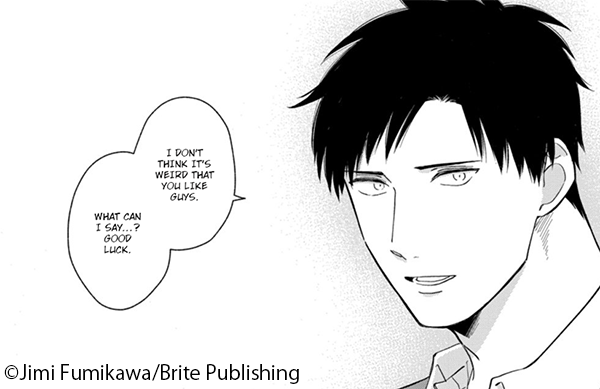
They say young love is the purest. I firmly believe it’s also the dumbest, silliest, and most awkward, and nothing captures that truly absurd “first love” feeling to me quite like Jimi Fumikawa’s I Seriously Can’t Believe You… with all its cuteness, cringe, and yearning.

The manga starts out with a ridiculous and innocent, but nonetheless cruel, joke that truly highlights how dumb and young these teenage boys are, with them not even considering the consequences of their actions until they’re already happening. Kon, our adorable main character, and his friends are wondering why the incredibly hot and popular Iida rejects every girl that confesses to him.

“Is he gay?”
“Wanna look into it?”
“What? How?”
“There’s only one way.”

Next thing Kon knows, he’s been suckered by his friends into confessing to Iida just to see how the other boy reacts. However, rather than accepting him—but still not offended or rude about it—Iida replies that he supports Kon’s inclination toward men but can’t return his feelings.

Continue reading “Awkward First Love: Jimi Fumikawa’s “I Seriously Can’t Believe You…””

A Love Letter to the Dumb Boys of BL

We all have our preferences regarding the type of characters we like. For instance, sadistic seme characters have been a mainstay in BL for a long time, presumably because they’re popular. So have tsundere uke characters, or super shy, virginal, naïve uke. You might like sweet boys or soft boys or badass boys or buff boys. But one character type I find enduringly wonderful in BL is simply: incredibly dumb boys.

And thankfully, there’s a wealth of them.

While chatting it over with the rest of the BL team, we decided on five categories of Dumb Boys (TM): dick for brains, beefcakes, naïve boys, school boys, and guys who’re just… really stupid. I put together some recommendations in each category, so if you, too, are a connoisseur of Dumb Boys (TM), please read on.

Continue reading “A Love Letter to the Dumb Boys of BL”

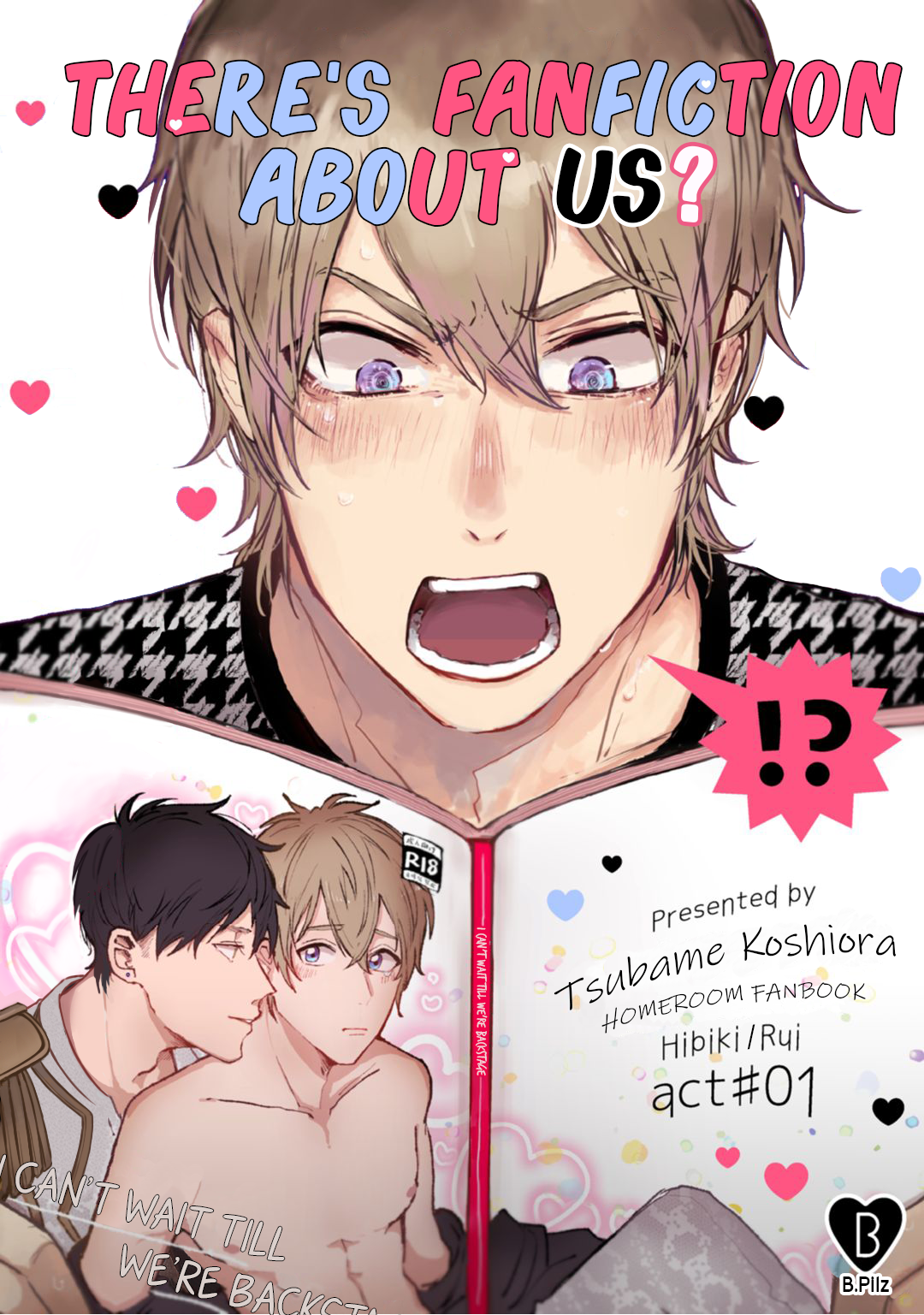
Idols, ‘Namamono,’ and “There’s Fanfiction About Us?”

Read on Renta!:
There’s Fanfiction About Us?

Japanese title:
俺たちナマモノ?です
Oretachi Namamono (?) desu

Author:
Tsubame Koshiora (@konashuor)

“Don’t Google yourself.” It’s common knowledge among celebrities, big and small, that it’s not a good idea to go searching for other people’s opinions of you or your work—especially not on the internet, where people can be particularly brutal behind the veil of anonymity. However, what if you googled yourself, and rather than finding criticism or bashing, you found something else? Say, for instance, art and stories of you getting pounded by your coworker?

Smalltime idols Homeroom—or H.R., with the H standing for Hibiki and the R standing for Rui—are two school friends who tried out to become idols in high school, and for five years they’ve grown into entertainers who’re tied together in both their personal and professional lives. This is a fact that hasn’t gone over the fans’ heads—in fact, there’s a whole faction of their fanbase (a majority of it, really) that’s quite keen on just how close the two are.

Hibiki isn’t sure what to expect when one of his drama costars Haruna tells him, “Hey! I searched ‘hibirui’ and found something interesting! Look it up with Rui♥” Rui tries to make him stop, terrified by the mean people on the internet, and initially he’s proven right when they stumble on a password-locked site with the description “concerned parties do not look.” The passwords are easy for the two to get past, considering it’s trivia about their entire career, but rather than a hate site shitting on them… it’s a fan-art site… filled with illustrations of them having sex…?

Continue reading “Idols, ‘Namamono,’ and “There’s Fanfiction About Us?””

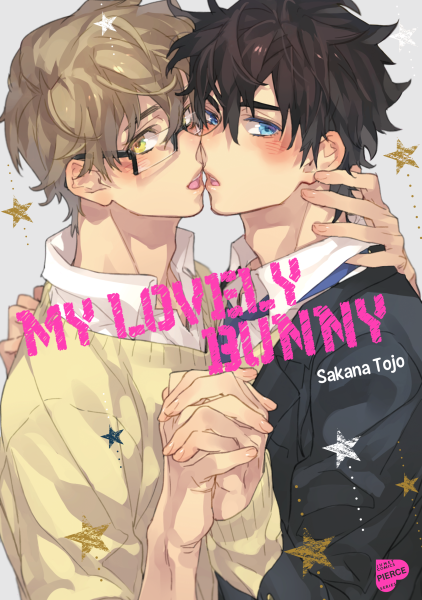
Artist Spotlight: Sakana Tojo

I’m sure everyone else has them, too: artists we would ride or die for. If someone insults them, we will defend them with our dying breath. We gaze lovingly at their art as if it’s a masterpiece in the Louvre, taking in every single detail from all angles. We follow and purchase every single thing they release, read every social media post by or about them, and have read every book multiple times. Well, that’s how I feel about Sakana Tojo.

Sakana Tojo / Sakana Toujou
東条さかな(とうじょうさかな)
Twitter: @diabolism_st
Portfolio: click

Available on Renta!:
My Lovely Bunny (星のうさぎ)
Love At First Bite (君と美味しい愛のコトノハ)
Baby, Sugar, Succubus (ベイビー、シュガー、サキュバス)
My Cat And My Bed (猫とベッド)
Endless After-School Honey (ホウカゴ・エンドレスハニー)

Sakana Tojo specializes in very fluffy, sweet, intense smut. A majority of her BL are released through Junet, a publishing line that caters to the more ero rather than story oriented side of the genre. She started out as an ero manga artist, and still does illustrations for various types of manga, light novels, etc.

Continue reading “Artist Spotlight: Sakana Tojo”

What kind of job is localization?

A lot of people who’re interested in anime and manga often think they’d like to work with it someday, but since localization is kind of a closed industry (understandably, since there’s a lot of IP that needs to stay hidden behind NDAs) there seems to be a lack of understanding for what goes into localizing, just how many different types of jobs there are, and what goes into taking a manga (or manhua or manhwa) from its original language and adapting it for an English-speaking audience. So I figured I’d take my personal experience in the manga localization industry and talk about that today!

What is Localization?

First off, what is localization? Simply put, localization is the process of adapting a translation to fit readers or viewers of a different culture. Literal translations can sometimes leave very large cultural concepts intact without explaining them or making them understandable to a foreign audience, and localization looks to solve that issue by making minor tweaks to the source material—editing a sentence to describe a food that was otherwise just named, changing the currency, changing a youth culture phrase in the source material to a similar style of speech, etc.—to make it easier to understand for readers who aren’t so acquainted with the source culture. I’ve lived in Japan four years and there are still cultural things that pop up in the manga that make me do a double-take, so localization is used to kind of explain or slightly alter certain cultural things that wouldn’t make sense otherwise.

Continue reading “What kind of job is localization?”

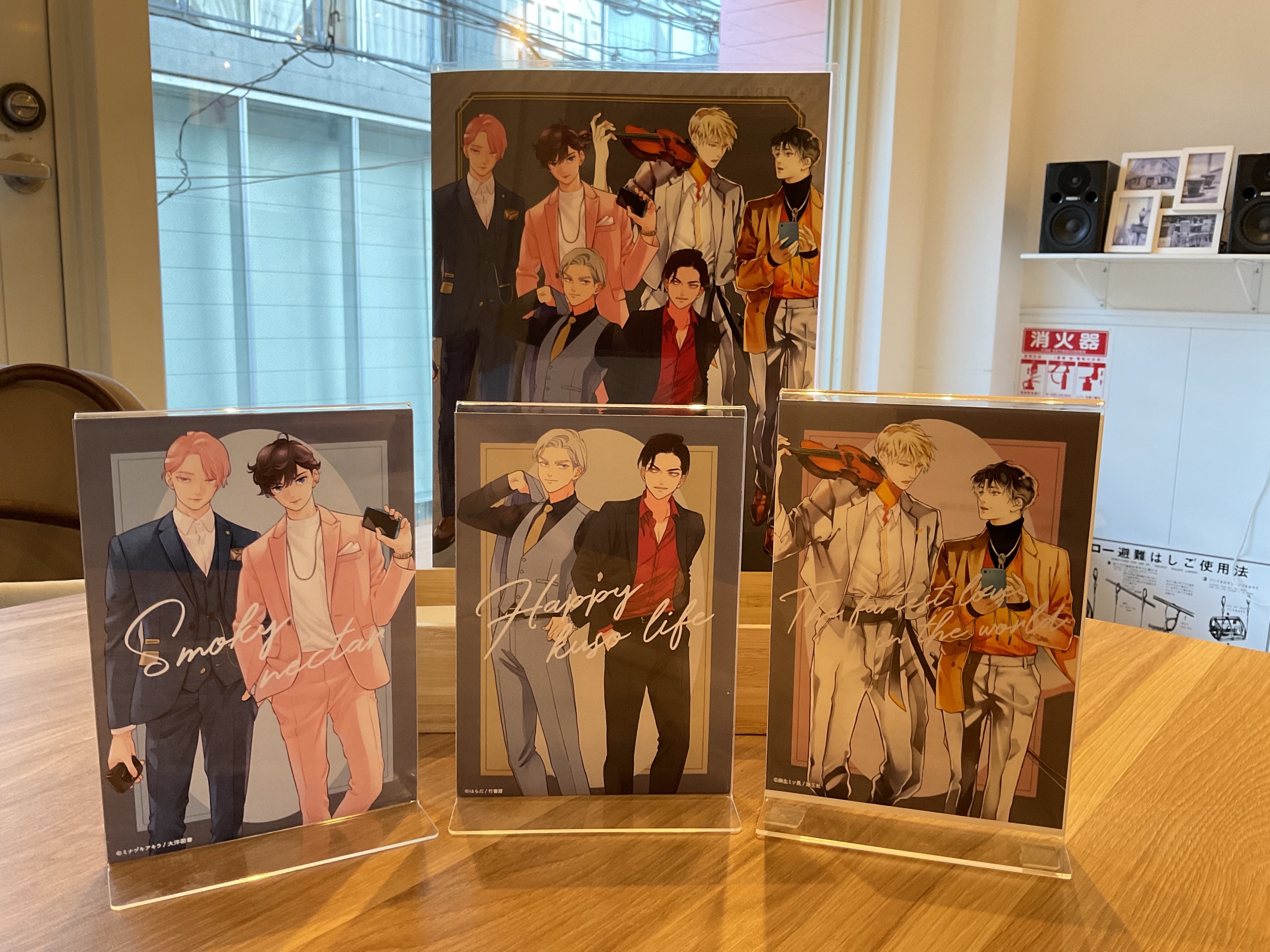
emo café: B+Library collab showcasing Harada, Akira Minazuki, and Mitsuaki Asou

Nestled in a narrow, trendy side street in Tokyo’s youth fashion district of Harajuku is a bright pink building named emo café, a tiny collab café that partners with mangaka and publishers to turn manga into a culinary experience. emo café is relatively new, having started up in the last few years, and follows in the footsteps of other BL cafés like Toriko Mangaten and ComiComi Studio Machida (r.i.p.).

I first noticed emo café when they did the second B+Library collab, featuring two absolutely wonderful manga that are on our site—Jimi Fumikawa’s I Seriously Can’t Believe you… (one of my all-time favorites!) and Jyanome’s Twilight Out of Focus—as well as Ichikawa Kei’s incredibly famous Blue Sky Complex (licensed by Futekiya).

There’s also been a café for Kurahashi Tomo’s Someday I’ll Fall For You, and a café for Tsubame Koshiora’s There’s Fanfiction About Us?, as well as a handful of other series. Emo Cafe’s had a lot of great stuff on offer.

When I saw they would be doing a third B+Library, this time for Harada’s Happy Shitty Life, Akira Minazuki’s Smoky Nectar, and Mitsuaki Asou’s The Farthest Love in the World I knew we had to go—especially considering Happy Shitty Life is one of our localizations, and Smoky Nectar is coming soon. Unfortunately, because of the massive popularity of all three artists (each one of them being a veteran in the BL genre) I once again couldn’t get in.

…That is, until they extended the end date by a week. Sometimes it pays to sit on Twitter constantly. -w-)b

Continue reading “emo café: B+Library collab showcasing Harada, Akira Minazuki, and Mitsuaki Asou”

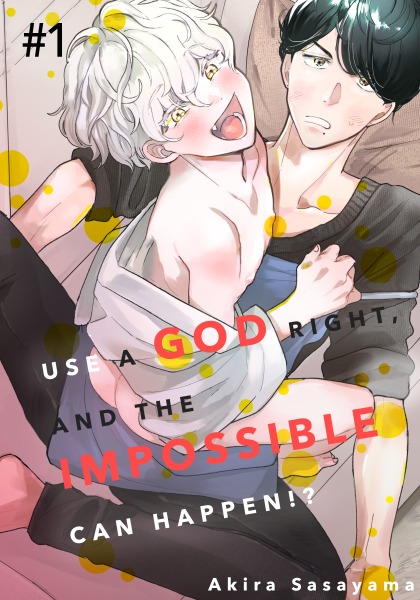
“Use a God Right, and the Impossible Can Happen!?” by Sasayama Akira

Read it here!:
Use a God Right, and the Impossible Can Happen!?
Japanese title:
神と不能は使いよう!?
Twitter:
ssym_akira

This one caught my eye because, put plainly, the cover is very cute. Very, very cute. You know how sometimes you can tell at a glance you’re just going to like something? That’s how I felt looking at the cover. Since I wanted to rewrite the product page anyway, I figured why not read the whole thing and, if I liked it, I’d review it. And I did like it, so I’m here to do just that.

The story follows porn actor Naomasa, and the man he finds Mitaka. No matter how many oysters he eats or supplements he takes, Naomasa just can’t seem to get it up anymore. Out of desperation, he stops by the local shrine on the way back from grocery shopping, hoping he can pray the flaccid away. There, he finds a beautiful young man passed out on the shrine deck. Figuring he can’t just leave him there, Naomsara brings him home and cooks him a vitality-filled meal, figuring some food might help. Sure enough, it does!

Continue reading ““Use a God Right, and the Impossible Can Happen!?” by Sasayama Akira”