
When I was suddenly asked in late May to attend AX as a representative of Renta!, I wasn’t sure what to expect. The last American anime convention I attended was in the early 2000s, and in Iowa, which is quite a ways from Los Angeles. I remembered being younger and hearing all the fanfare, seeing all my online friends from Cali attending, and dreaming that someday I’d be going to such a huge con—little old me, from the midwestern United States. And now here I was, being made that offer, from my office in Japan.
I’d never been to such a huge convention—even in Japan I’ve never been to Comiket, instead opting to attend the smaller events scattered through the year like HaruComi and Comic City. I wasn’t sure what to expect. Granted, I would also be attending as an industry insider rather than a fan, which is also a very different experience.
Unfortunately, due to plane delays we missed the whole first day of the convention. By the time we arrived in L.A. after our ten-hour flight and cleaned ourselves of our travels, badge pick-up was already closed. This was very sad for me, since a majority of the manga panels were squeezed into the first half of the first day. But alas, you can only do so much when it comes to airplanes.
So we woke up fresh and early on day two, outlined our plans over the delicious breakfast buffet (I missed American breakfast 😭), called a ride, and headed out—
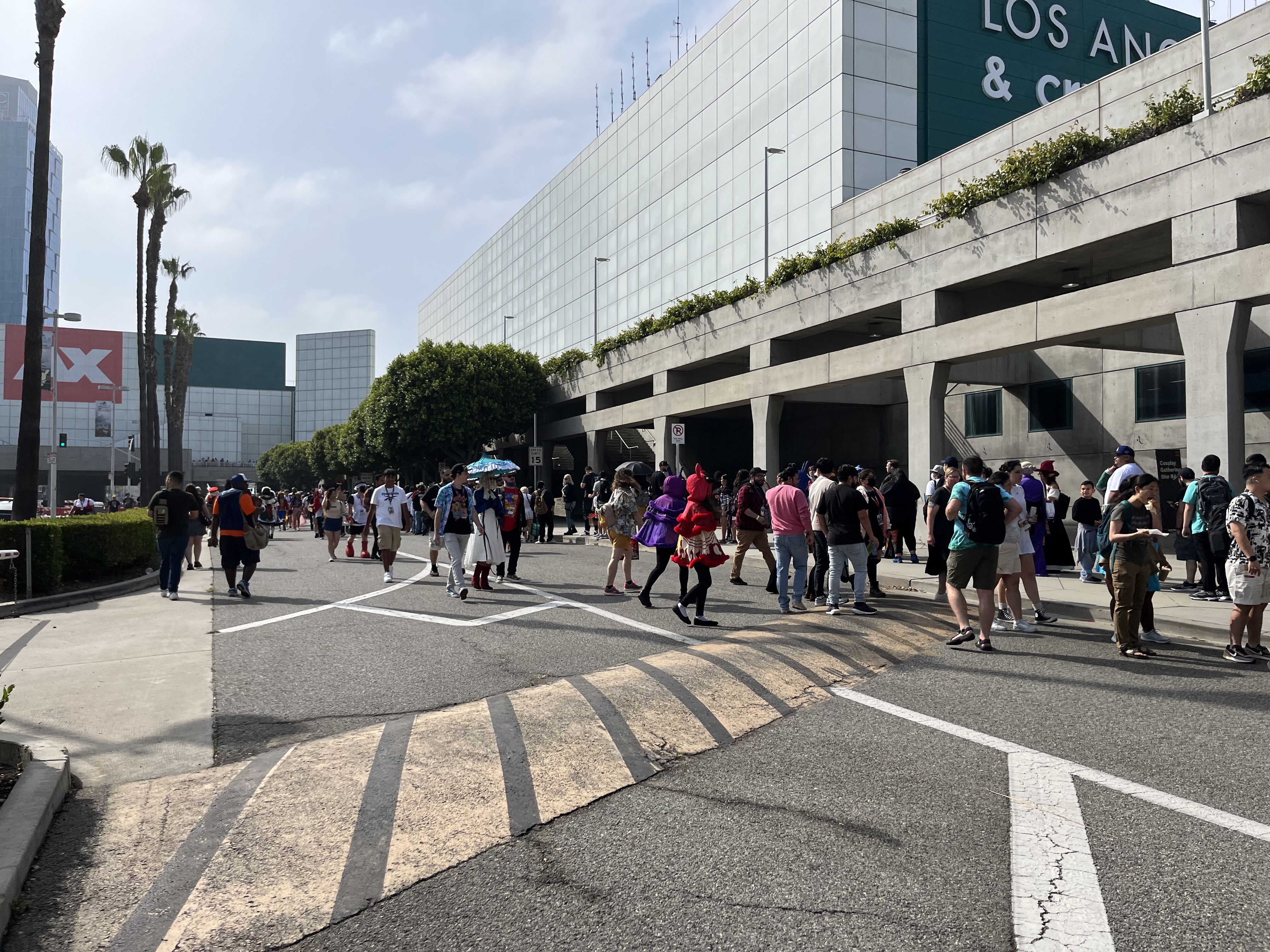
and were promptly greeted by one of the longest lines I’d ever seen. Winding back and forth across the entire two-block convention center was a wall of people, some dressed simply and casually, others decked out in the most amazing cosplay you’ve ever seen, and the rest somewhere in between, wearing colorful wigs or repping their favorite series with shirts or hats or bags, carrying props or gigantic plush.
This is admittedly my favorite thing about otaku events both in the U.S. and Japan—the open and unabashed love people show for their hobbies, being in a space that is for and by people who love anime and manga and games. It’s such a wonderful and exciting feeling. There’s often so much shame in being an otaku, and people are always hiding behind twenty layers of irony, but not at anime events like this. People just wear it on their sleeve—sometimes literally—and that’s beautiful.
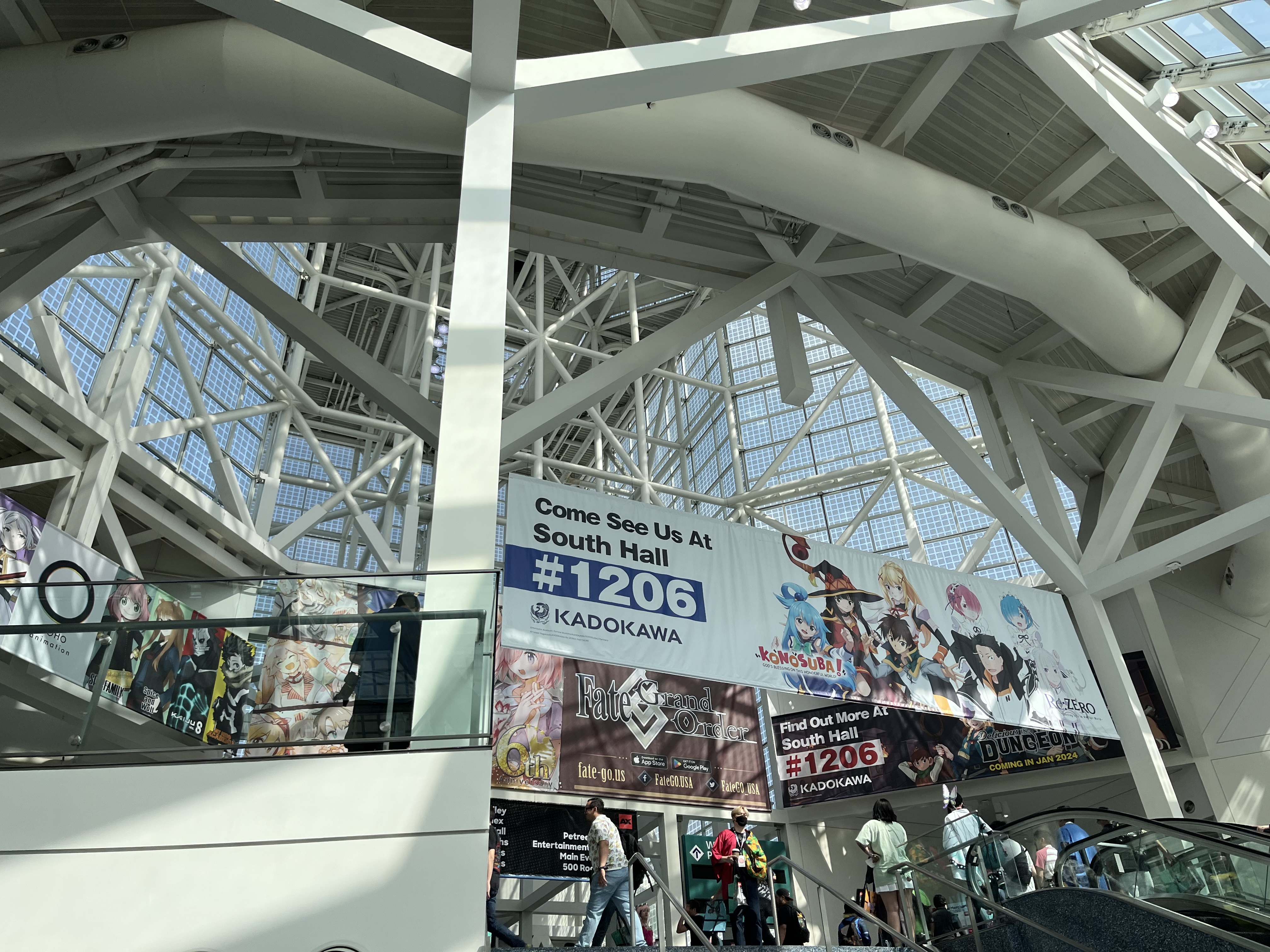
Trying not to gawk too much at the cosplayers or the decorations—gigantic blow-ups of the con mascots, banners decorated with every popular franchise under the sun—we found our way to the ticket center to get our badges. As much as I loved looking at the people in line, I was greatly relieved when they showed us the way to the industry entrance and we were able to just go in without having to wait outside. In my defense, it was very hot out. Not as hot as Tokyo, granted, which becomes a tropical hellscape every summer. But still hot. The line may be an integral part of the AX experience, but I was willing to sit this one out (literally).
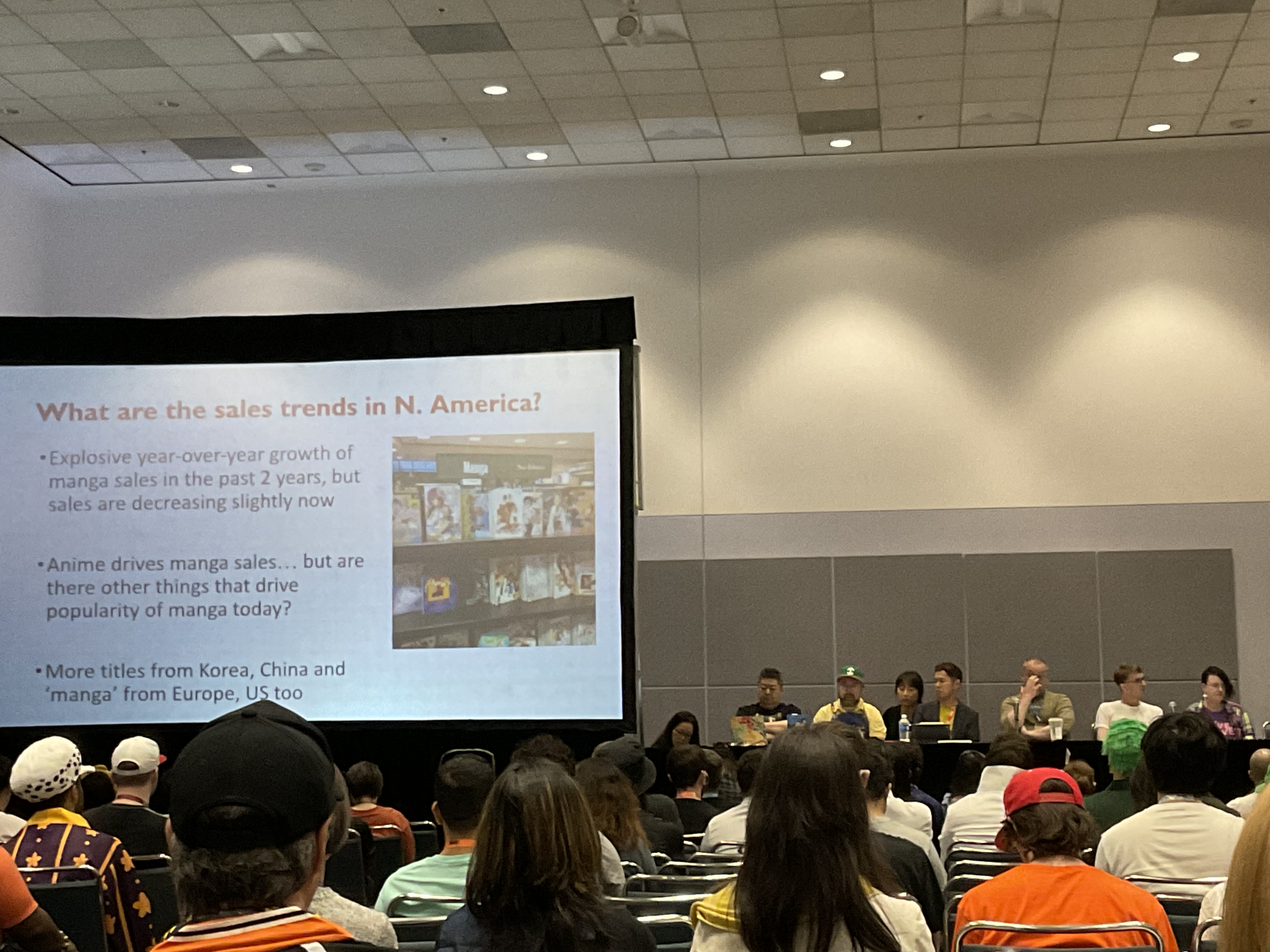
After much confusion and desperately trying to find our way around the gigantic venue (and getting lost three times), the first panel we went to was the Manga Publishing Roundtable, attended by some of the biggest names in the industry as well some new break-outs. Probably not the most unbelievably exciting panel for those outside the industry, but I’m a huge nerd and this is also my job, so I took about five pages of notes.
If I were to condense my biggest take-aways:
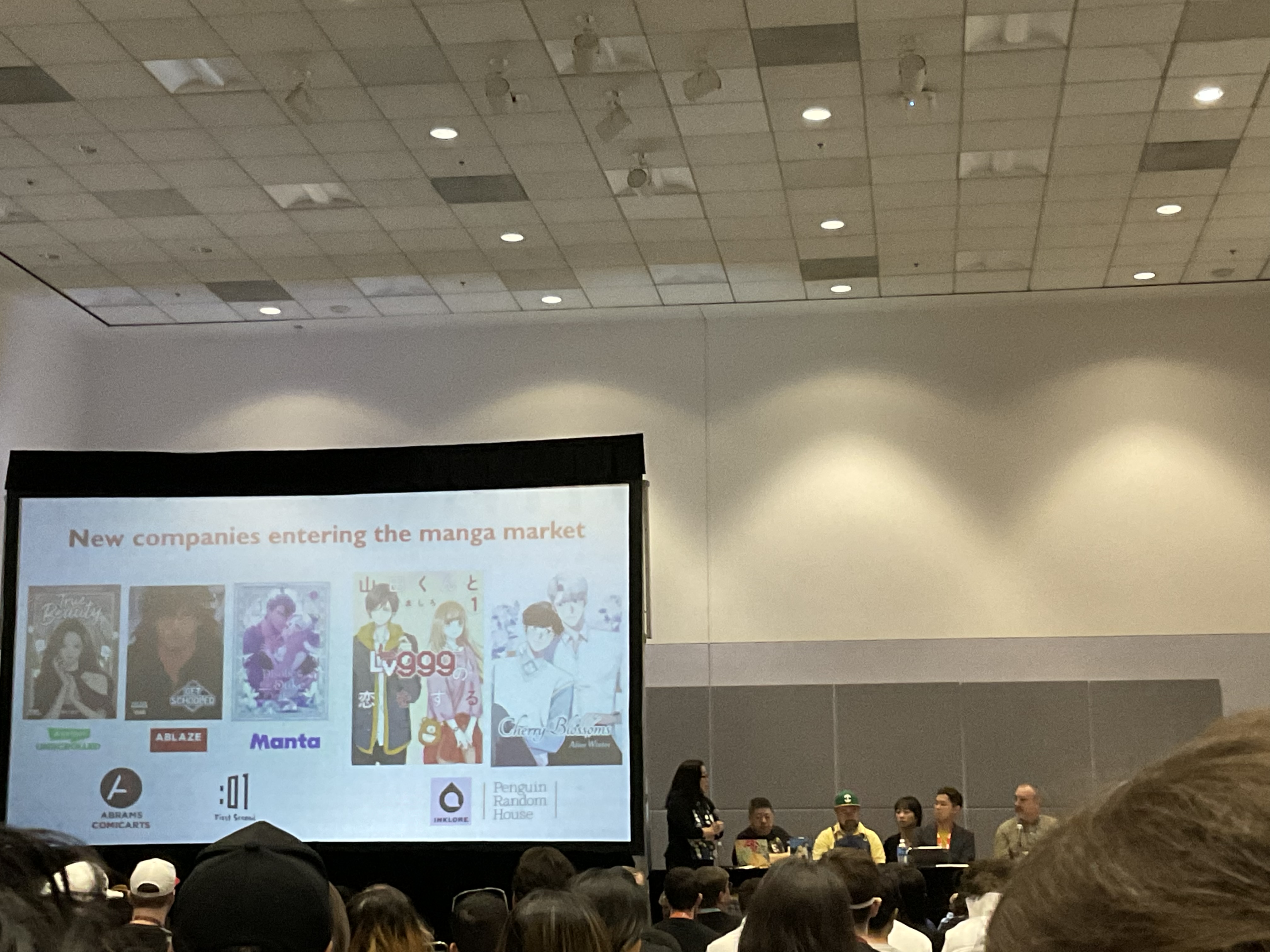
- Digital manga is on the rise, being that it’s a way to get more titles to more fans without the higher cost of print (though there’s still a huge market for print as otaku enjoy owning hard copies of the things they love).
- Digital manga also fills a gap often left by print, which focuses more on shonen and seinen titles, whereas a significant majority of digital readers are female.
- There are more and more new publishers as the popularity of manga (and manhwa/manhua) continues to grow, even amidst the sharp decline post-pandemic.
- There’s a move away from traditional manga and toward VertiComix (webtoon and long-scrolling format) as more and more people read on their phones.
- Western audiences are looking for more diversity in their comics, not only in terms of story but also in terms of characters, themes, etc.
Overall a very interesting panel, and if you can find a transcript online and are a huge manga industry nerd like myself, I highly recommend giving it a read.
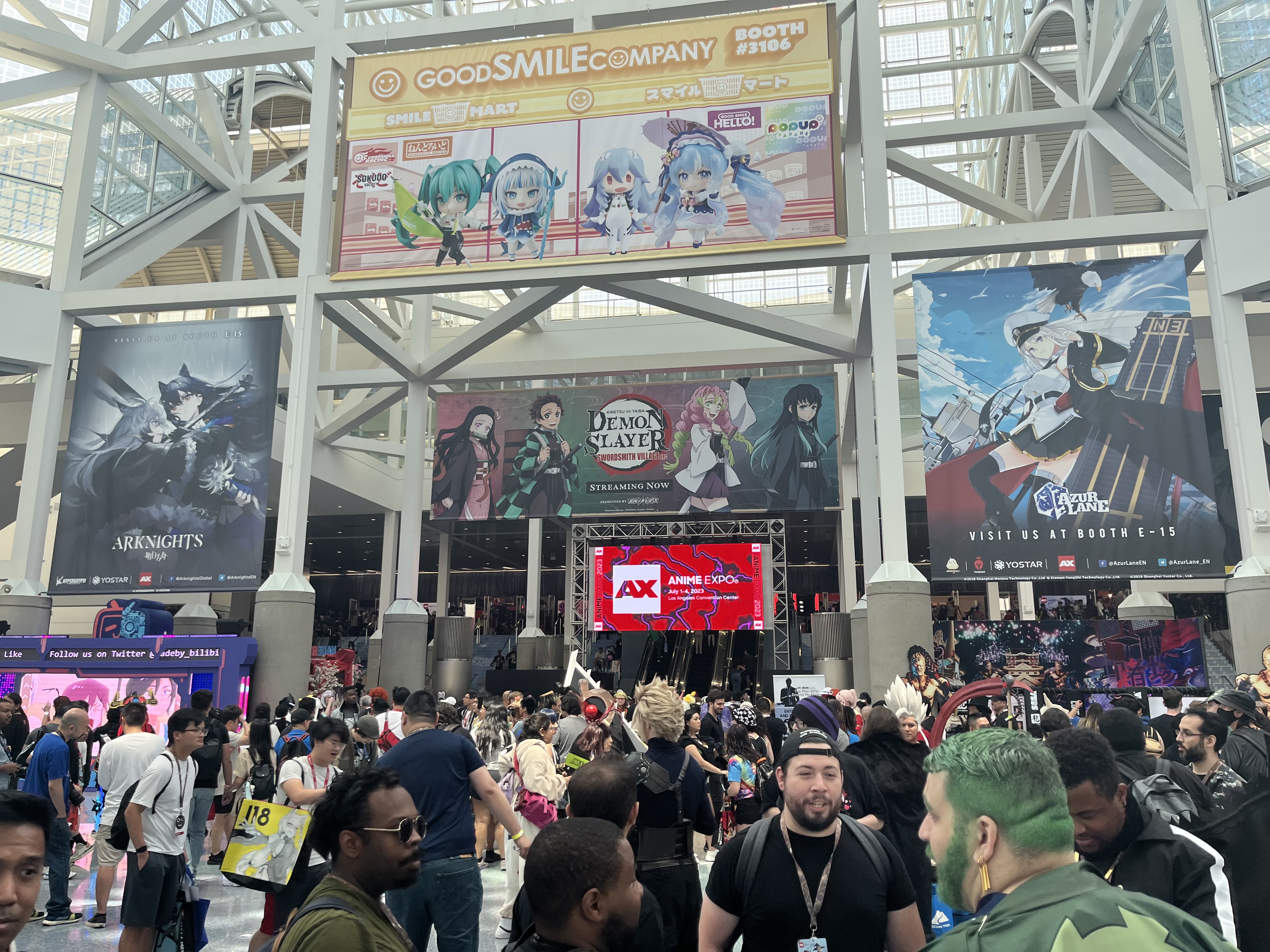
Anyway, after the panel we took the opportunity to do some networking and chat with the panelists before moving out to explore the actual convention. By this point, the huge line that had been outside was now filling the halls, and you could barely move. But it was the good type of crowd—the type where you know you’re somewhere fun and exciting, and surrounded by people who’re there to have a good time. (Sometimes I wonder if this is what sports fans feel like when they go to big games…)
For me… I just wanted to see all the Genshin booths. 🥺 Aside from BL manga, Genshin is my current big fandom. Thankfully, my coworkers were very kind and we went to the industry booth (which was unbelievably crowded), stared intensely at all the amazing cosplayers, and then went out for some ice cream. There was a really cute food truck by a local ice cream company called Creamy Boys (fitting…) themed after the nations in Genshin. I got Liyue, since I will eternally love Liyue, but my coworkers got Inazuma and Sumeru. Everything looked delicious, but sadly it was a reminder of how huge American portion sizes are, and one cup was more than enough.
After this we were whisked away to a business meeting with our tiny U.S. staff (as in, our staff that lives and works in the U.S.—we actually have quite a handful of U.S. citizens who work at the Tokyo office) and had fun discussing the cultural differences between these kind of events in the U.S. and in Japan. For one, most events people consider comparable to western-style anime conventions, like Comiket, are actually just doujin events where people sell their self-published comics and goods, and cosplay is only allowed some of the time (and is pretty heavily controlled). Big events that actually connect fandom and industry like western conventions aren’t so common, especially not for manga.
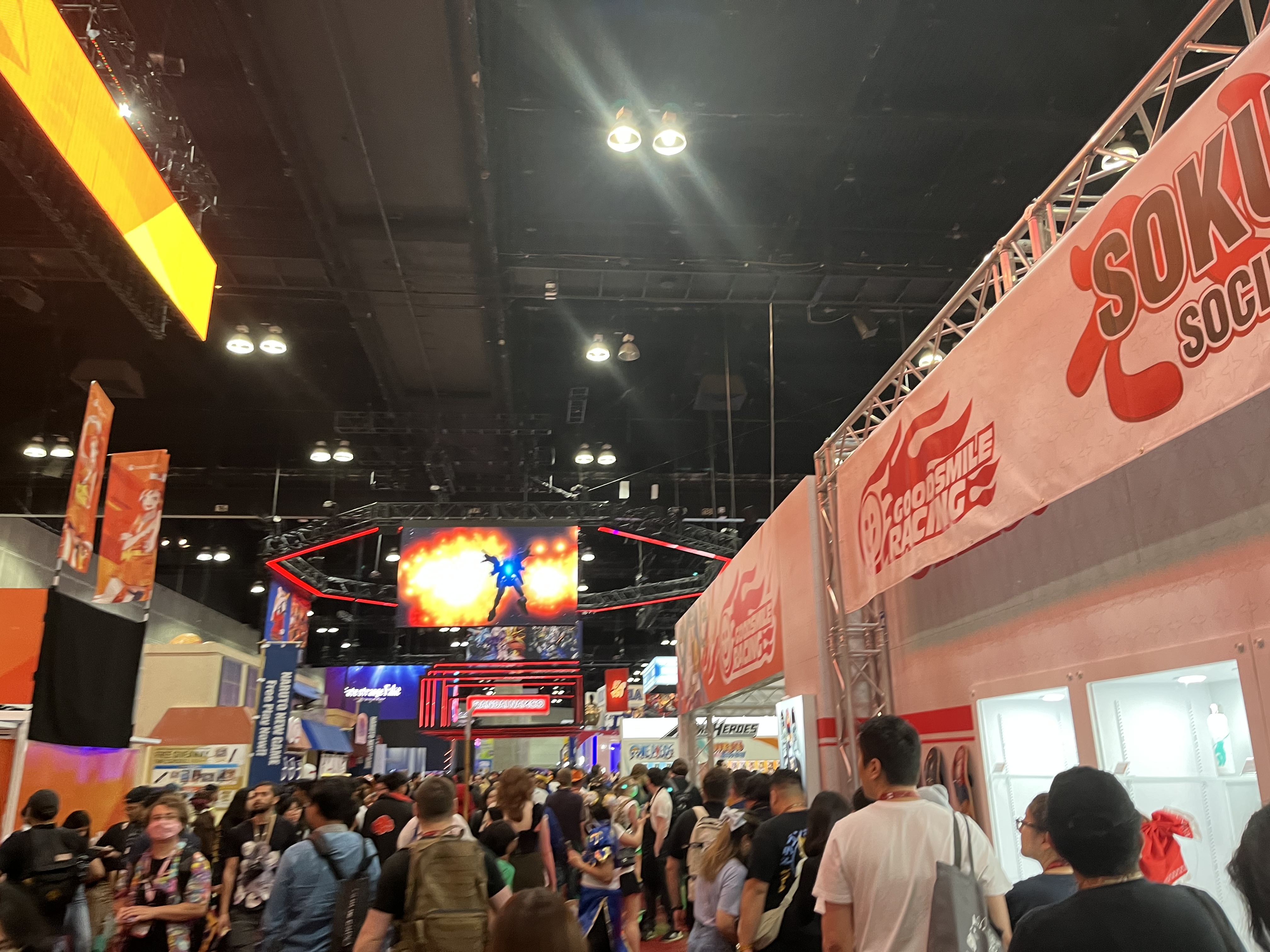
Afterward, we headed back to the con to enjoy the industry booths. While the main goal was to mostly hit up the manga booths and do aisatsu (essentially Japanese-style networking) with our fellow insiders, we’re all still fans at heart. So there was a lot of ogling of pretty boys from otome game booths, taking photos of random oshi from favorite shonen or game series. Plus, as people who work in the industry, there was a sense of excitement just looking at how other companies and brands and publishers set up their booths—how they displayed their wares, what kind of goods they brought, what they did or didn’t display, etc.
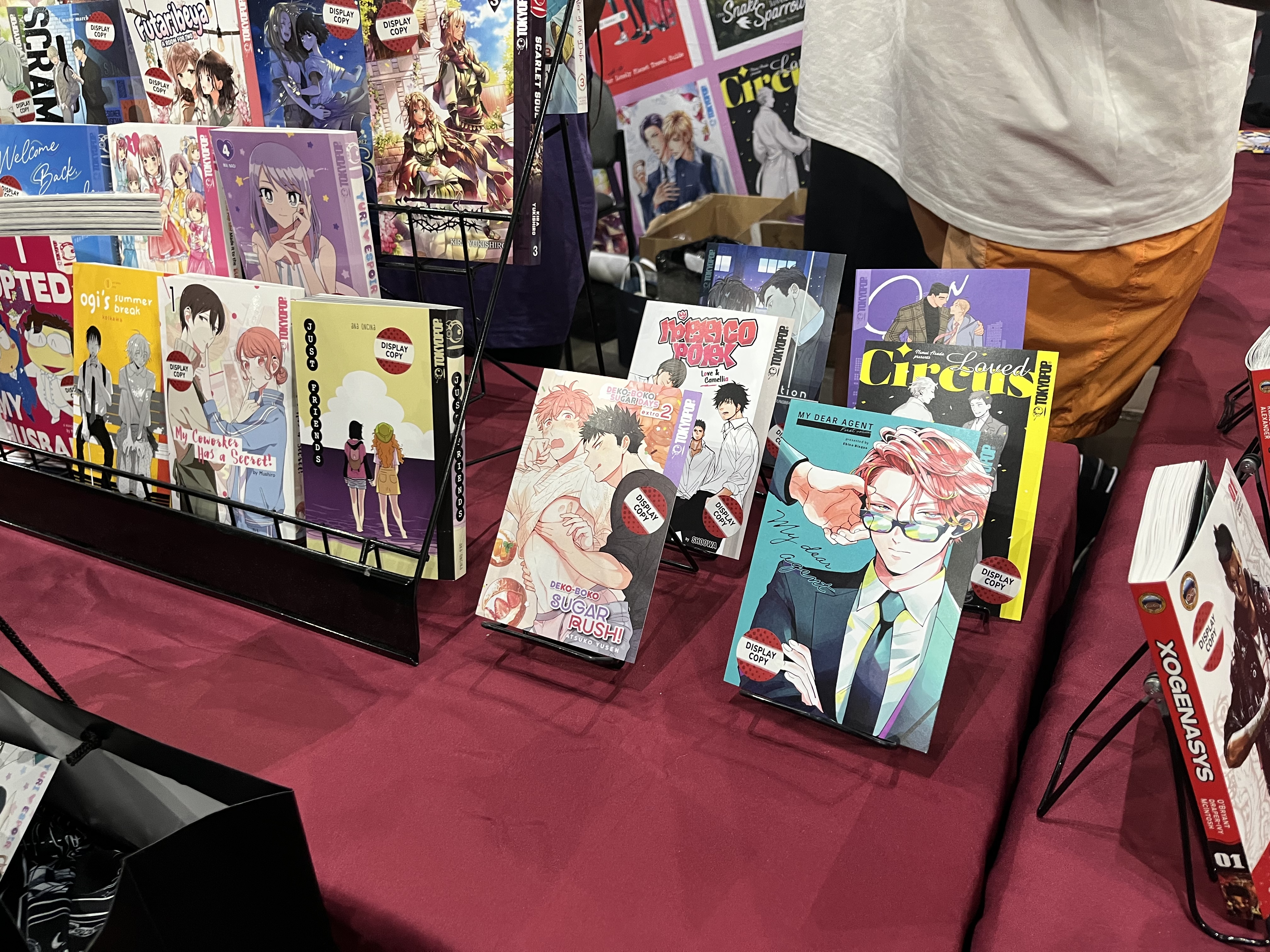
One thing that surprised me is that there really wasn’t a lot of BL. For how popular BL continues to be (whether original or for shipping purposes), and for how much it has saturated the market and just become a very normal genre in Japan, it still seems a tad stigmatized in the West. I hadn’t been expecting that—perhaps I’ve just been away from western fanbase for too long (which is kind of sad…). My favorite booth overall was probably TOKYOPOP’s LoveLove booth, which is their BL, GL, and LGBTQ+ line. They had adorable goods for both BL and GL, and so many lovely postcards of their manga covers. I took quite a few of them, myself. And also bought a sticker. I would have bought more if I’d had more cash on hand, but I was saved by my own unpreparedness.
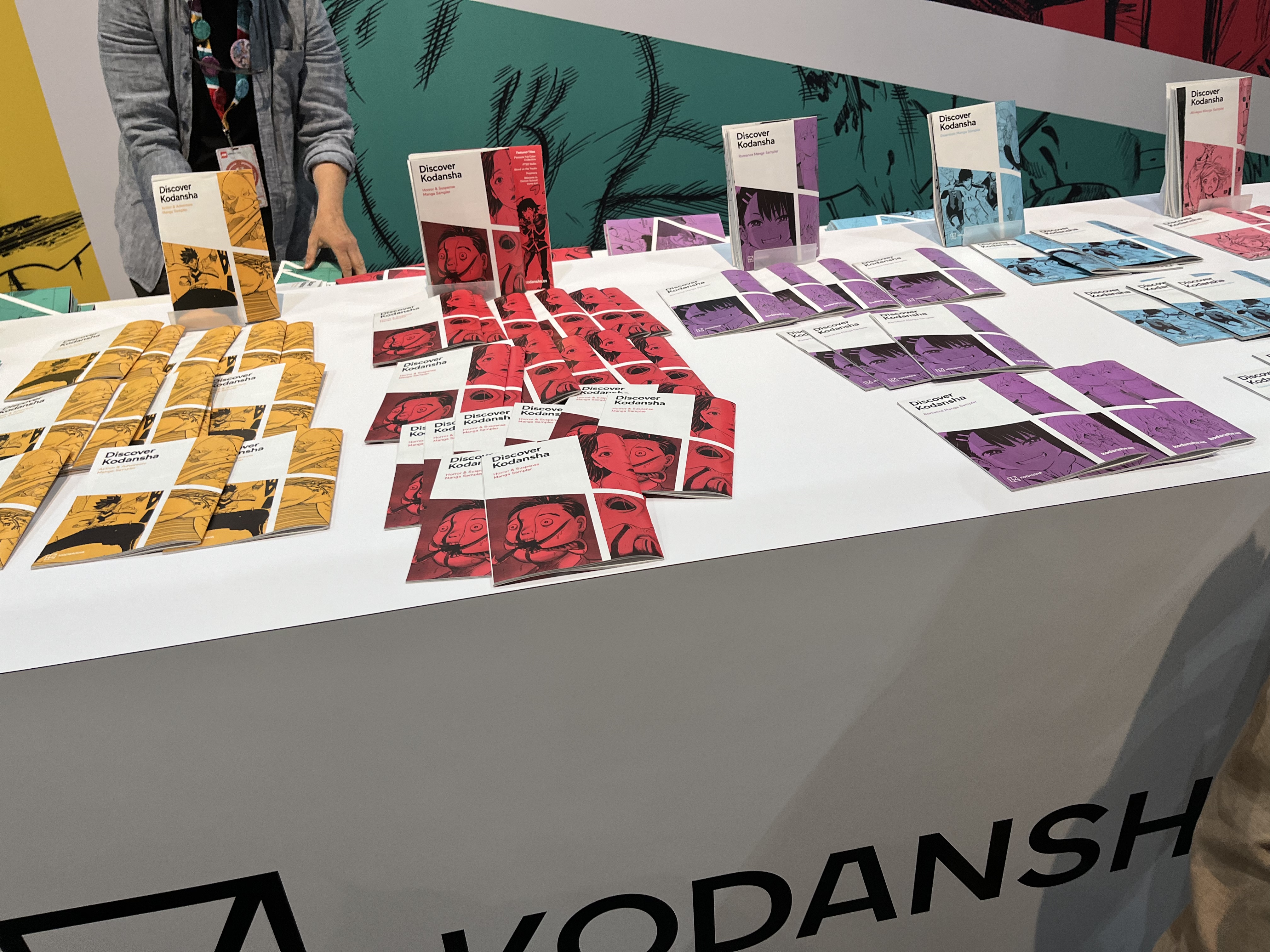
KODANSHA’s booth was also amazing. While they weren’t displaying any BL titles (their LGBTQ+ line was currently showcasing their GL content, which is also wonderful), their booth was so colorful and fun, and they had all these wonderful booklets showcasing their manga. We also bought some books by Yen Press, ogled the wall of manga covers at Manga Plaza, and just overall had a wonderful time as both fans and industry nerds.
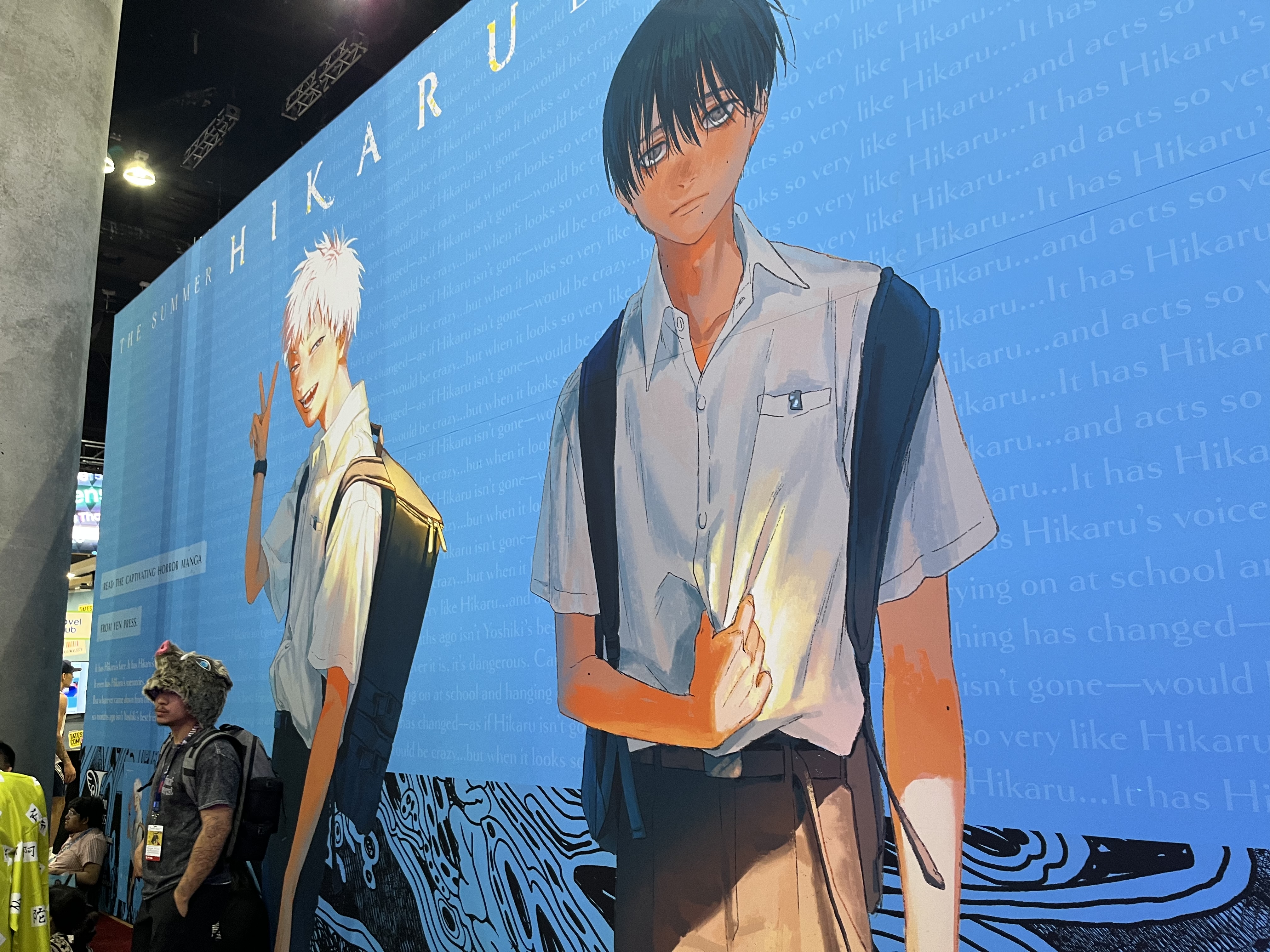
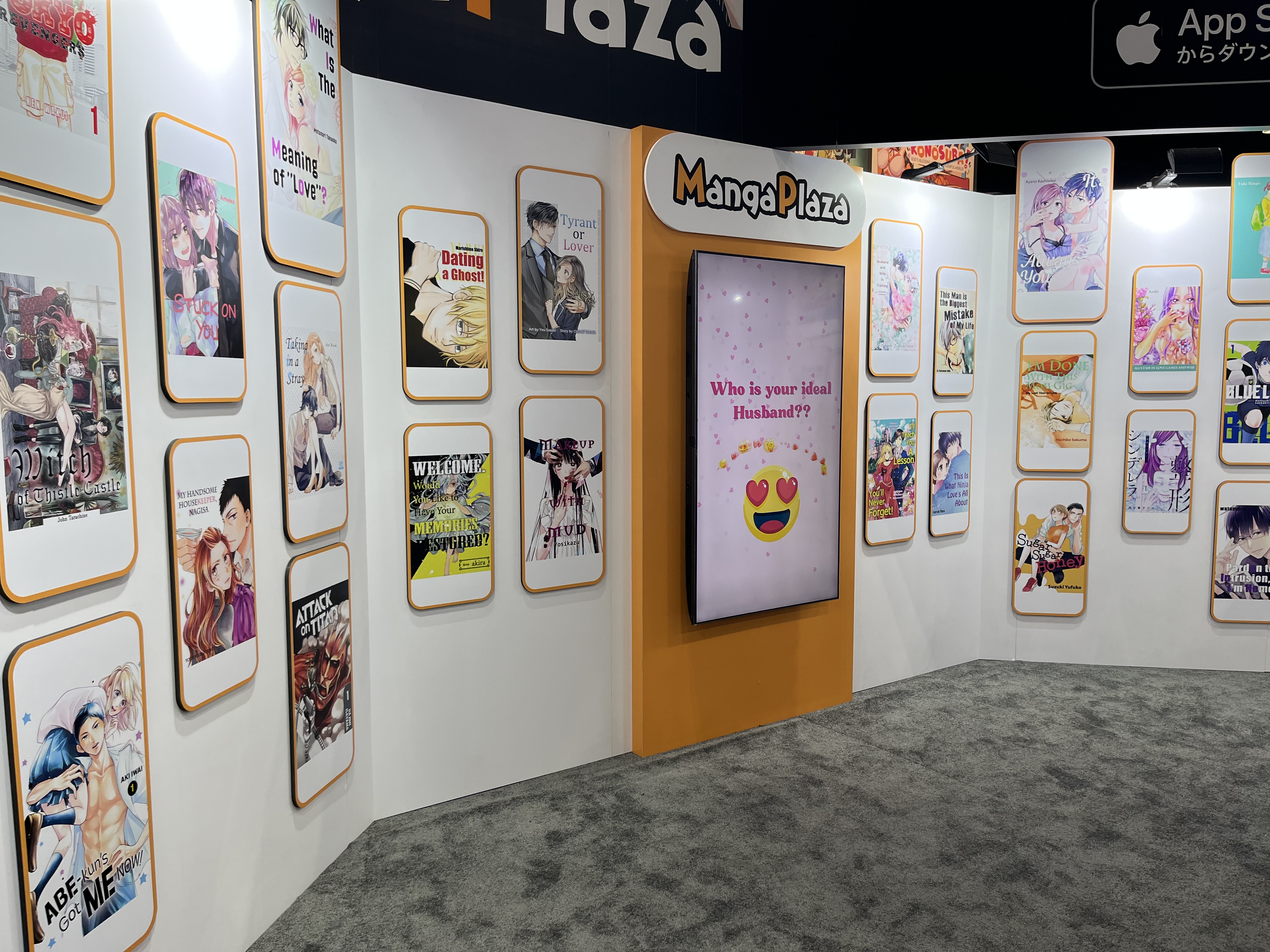
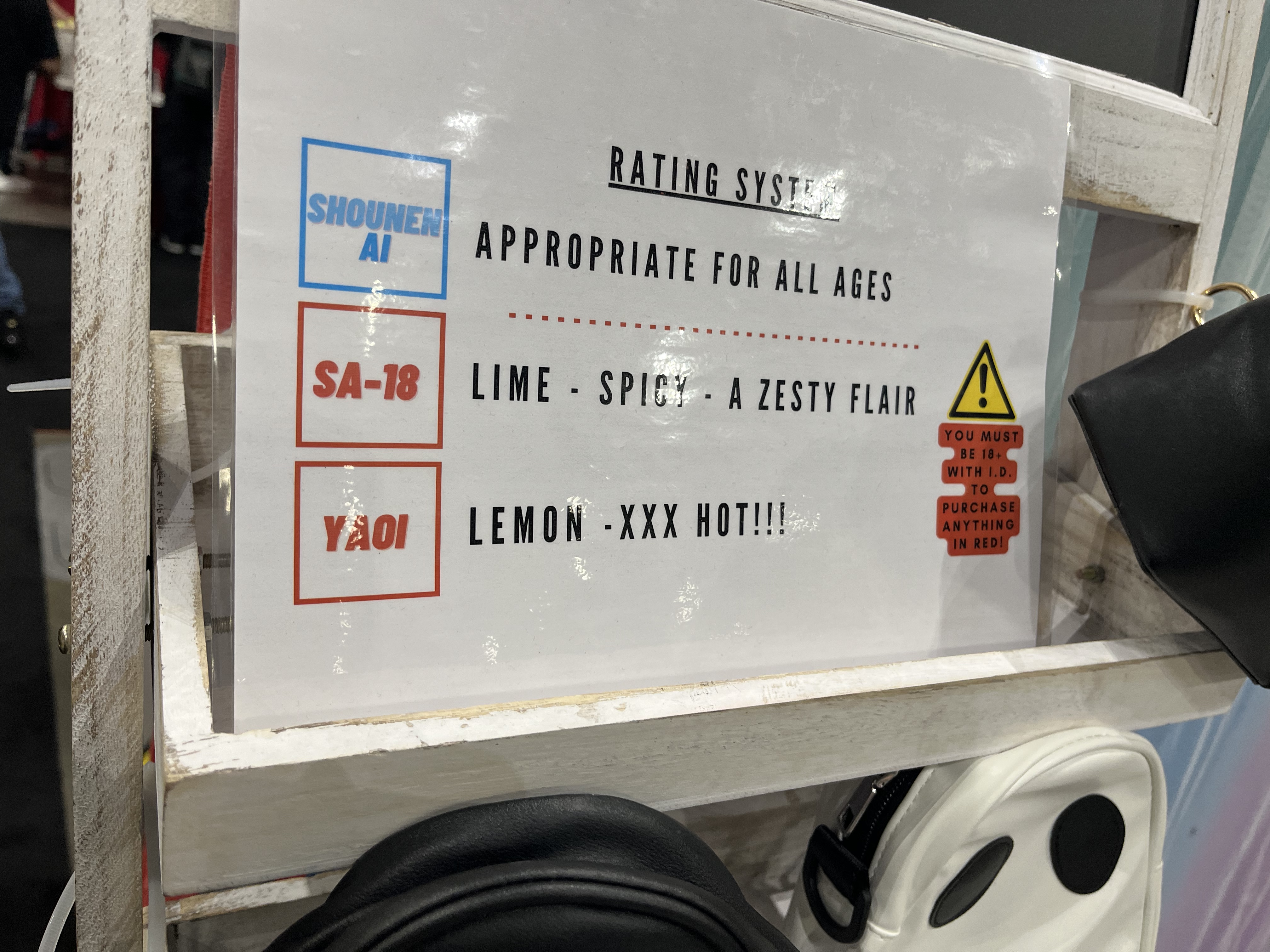
One silly thing: the incredible line for the R18 section. We’d forgotten that you need a wristband to access the adult booths, and when we went searching for the area to get them (I.D. in hand—make sure to come prepared!) we were amused to find the line was the length of the entire industry hall. We ended up waiting for around 20 minutes for that coveted adult-content access, with so many people coming up and asking “…is this the line for the wristbands?” Porn continues to be a popular and thriving market. Bless.
Once we were mostly done making our rounds at the industry booths, we headed back toward the panels for a discussion titled Anime Journalism: How To Be an Otaku Gumshoe. While we’re not going into journalism any time soon (as far as I know…), it was still a very interesting panel with a lot of takeaways that are useful even for marketing, social networking, etc.
- Look for your unique voice and go from there.
- Talk about what you love.
- Look for niches you can fill.
After that, it was time to call it a night and do some slightly less otaku-y things, like visit The Last Bookstore and Whole Foods. And try to get some sleep, even though in my brain it was still technically 3PM in Japan. Nonetheless, after 18,000 steps worth of walking, standing in huge, hot crowds, and lots of excitement and networking, a human can easily fall asleep even in the middle of the afternoon.
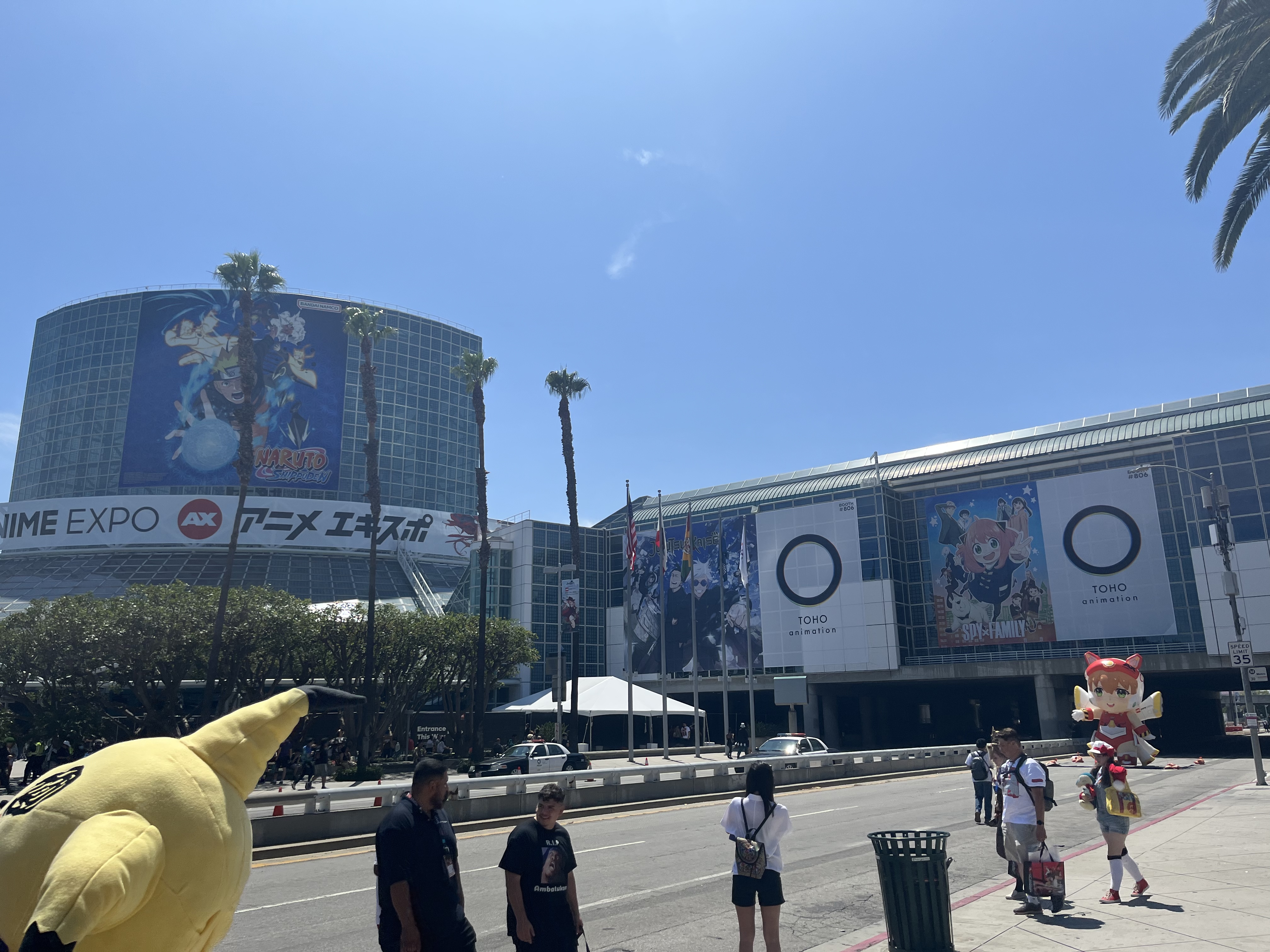
Onto day three! Similar to the previous day, we woke up and discussed the convention over breakfast (both our findings from the day before, as well as our plans for the day), but then we set aside some time in the morning before our upcoming business lunch to take down notes and do other work. Alas, even at an exciting anime convention, a work trip is still a work trip…
Then we went out to a beautiful hotel luncheon with a partner to discuss manga, branding, licensing, and business. These are the type of conversations you can expect to have working for a manga localization company, and if that’s appealing to you, this just may be the industry for you! For me, and I live and die for these conversations, so I had a lot of fun discussing BL manga audiences and marketing over my Caesar salad.
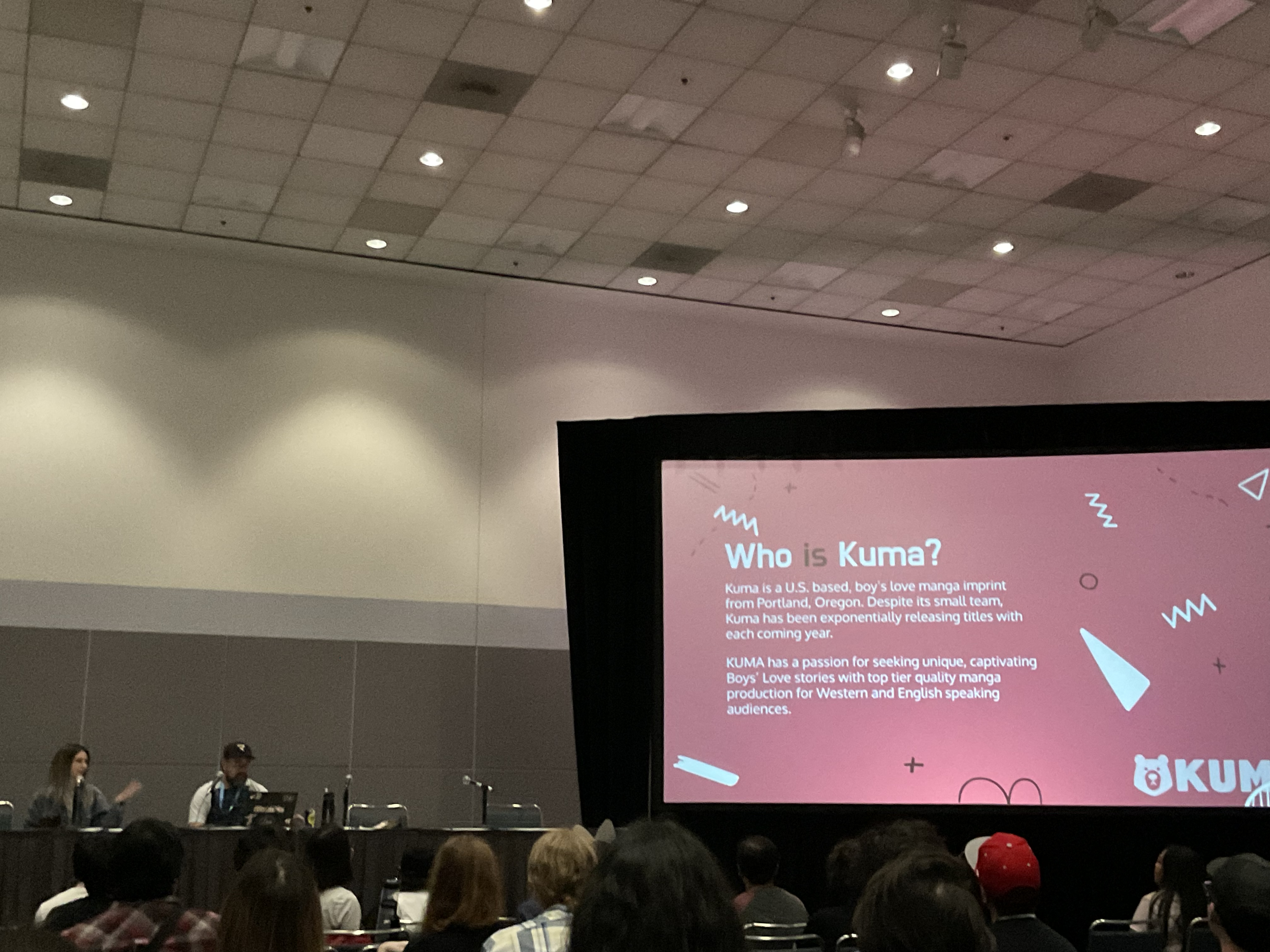
We tied things up just in time to get to the panel we were most excited for: Denpa and KUMA’s discussion on manga licensing and localization. While KUMA is very different from us, almost exclusively working in print, they choose so many interesting and amazing titles, and it was so fun to see how Andrea—the one-woman show behind the publishing line—does her work and chooses her licenses. As a BL fan, it was so fun to watch her passionately discuss BL and the titles and manga she focuses on. It made me very happy to be able to have a short discussion after the panel as well.
As for Denpa and KUMA’s panel, there was less industry information to take away than the other two we attended, but the biggest one is this:
- Just as much as sales, it’s important to the publisher as well as the mangaka to know their license is in the hands of someone who cares about it and wants to make a quality product that’s true to the original.
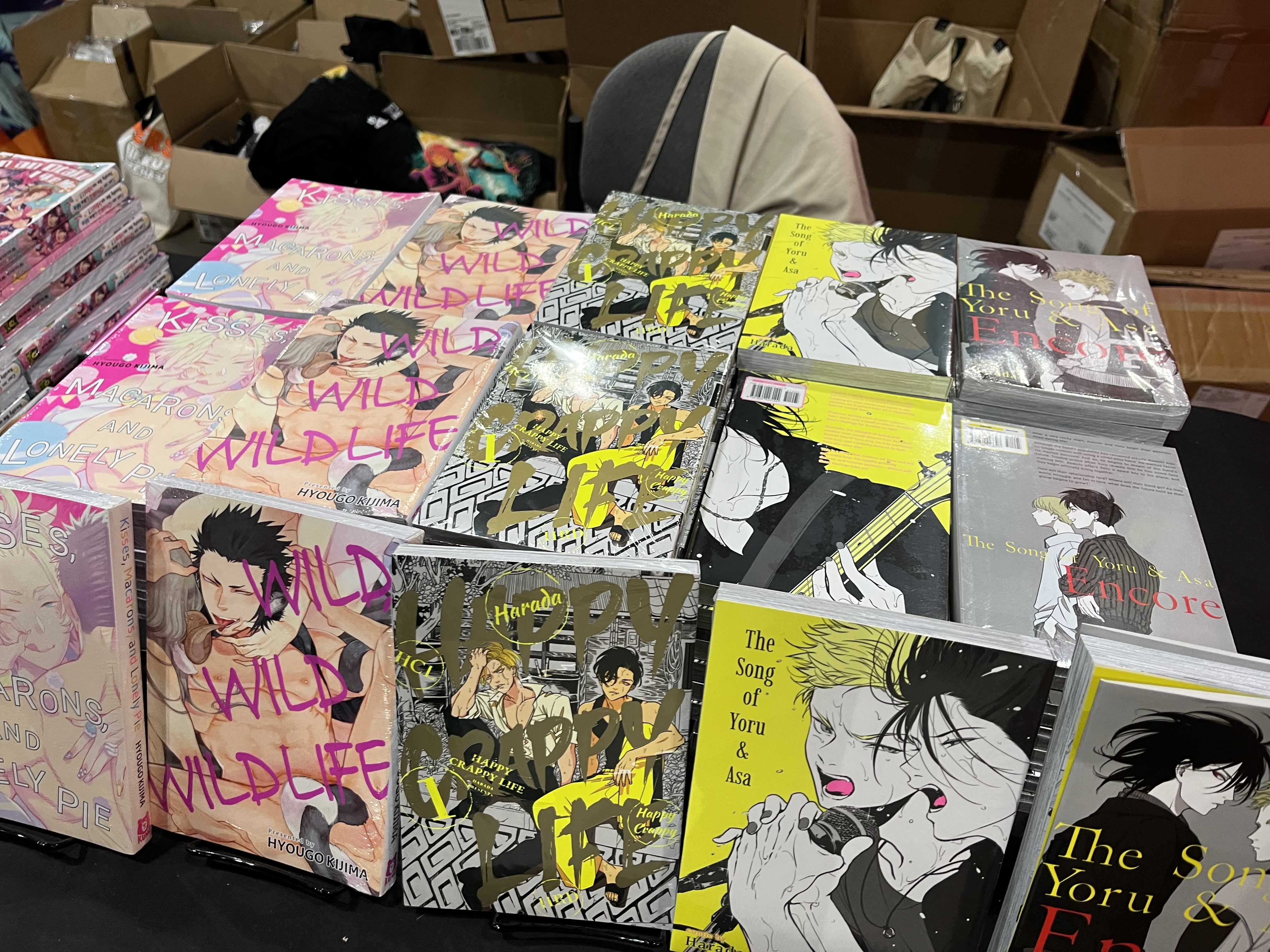
I personally really loved that message. Needless to say, directly after the panel we headed back down to the industry booths and went straight to KUMA’s, buying a couple of their books for our personal collections. They also had really cute goods, including some stuff from Harada, but I was able to hold back.
After that we did some more aisatsu with various friends and acquaintances running industry booths, then rushed off for another brief business lunch, and… I wish I could say we then went back and enjoyed the rest of the con, but sadly that was not the case. 😭 The reality is that when on a business trip, business comes first. So while I enjoyed the many discussions of marketing and licensing, we didn’t get to step foot in the artist alley, and missed a majority of the panels and events it would have been nice to go to—if only just to reacquaint ourselves with the western audience.
The weird thing about living in Japan and working at a Japanese company is that you slowly, over time, become less knowledgeable about the English-speaking market since it’s no longer what you’re surrounded by daily. Overall, I think that was the most important part of this trip—getting reacquainted with western audiences not only through watching the panels and looking at current sales figures and trends, but paying attention to the questions the audience asked, watching what they bought, and seeing what booths they were gathered around.
There may be many similarities in the Japanese and English market (for instance, a love of BL!)—but it’s also important to acknowledge and respect the fact that English audiences sometimes want and need different things, find different things appealing, etc. It was fun to glimpse into that.
Sadly, the next morning, day four of the con, we had an early AM twelve-hour flight back to Japan, and weren’t able to attend at all. But it was so incredibly fun, and we learned so much from both the industry professionals and the anime fans all around us, so we’re already looking forward to coming back next year! Hopefully not just as voyeurs this time. 😉
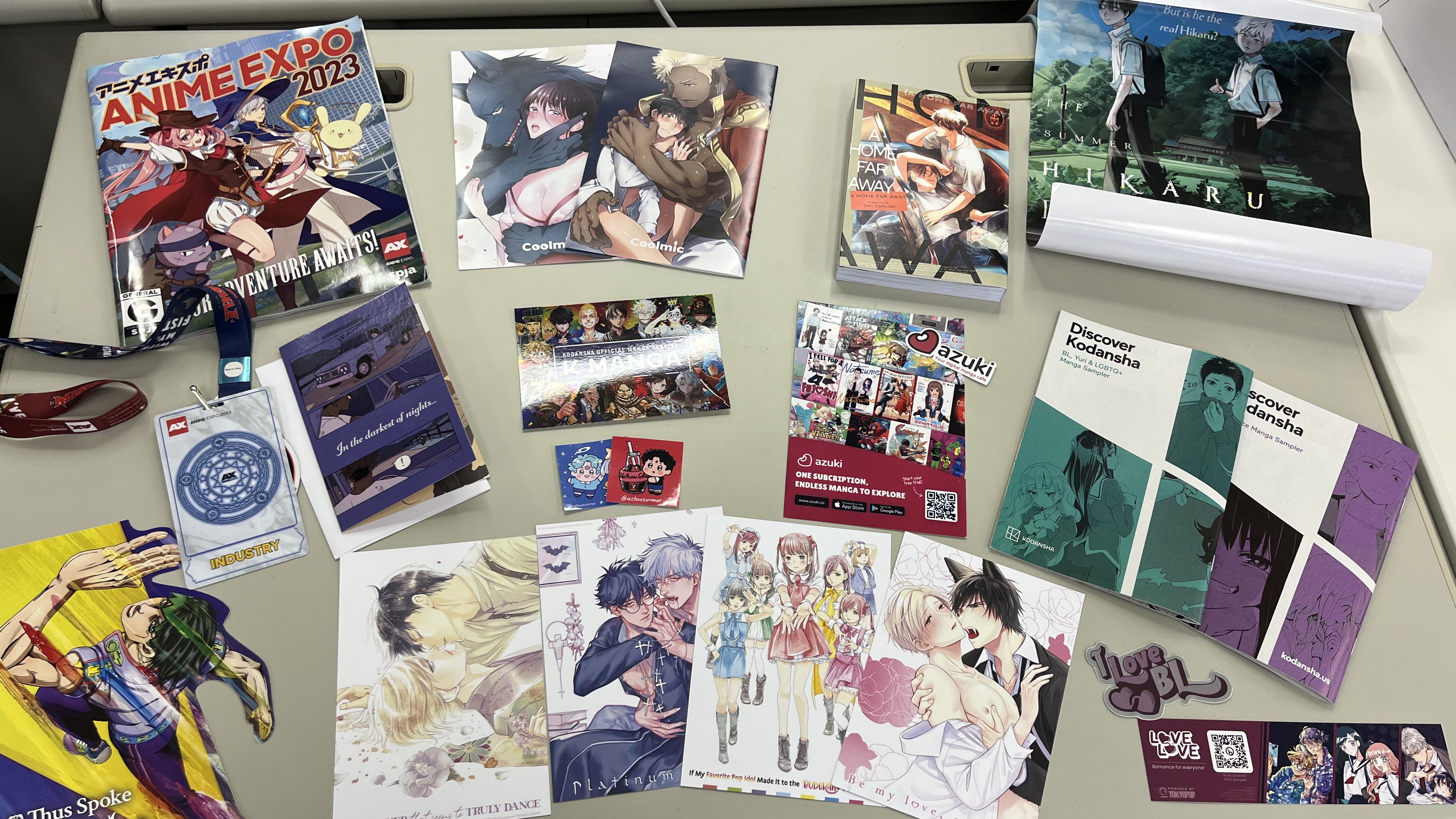
For those who made it this far: did you attend AX? And what would you like to see from Renta! in terms of future booths and panels at cons like this? We always appreciate feedback and ideas from our readers, since knowing what you want is the first step in the entire process.

 rentaBLog
One thought on “Anime Expo 2023: Industry Noob Edition”