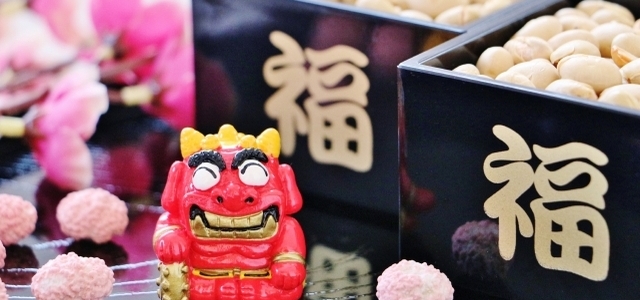
It’s the beginning of February, and you know what this means—it’s the beginning of spring! Uh, wait, no. Or, actually, yes. According to the old lunar calendar in Japan, the 3rd of February (or the 2nd, every four years) marks the separation of Winter and Spring, and is thus called setsubun (節分、”seasonal division”). The next day is officially considered the first day of spring, which is often associated with new beginnings, much as the New Year itself. So Setsubun, as a festival, has a lot to do with cleansing the previous year, to carry on into spring with good fortune.
But there’s also something sinister that happens during this crossing point from one season to the next, and, considering festivals like Walpurgisnacht and such, various cultures seem to agree on this: between seasons, the spirit world approaches our material world, so wandering spirits get too close for comfort. Thus, people had to come up with ways to ward them off.
Setsubun has its origins in the Chinese rituals of tsuina, but it got to its current form during the Muromachi period (1336-1573). Aristocratic households would throw beans into the open air to drive evil spirits out of their home. The practice apparently originates from a legend about a monk on Mt. Kurama, Kyoto (THE hub for a lot of demon legends) that blinded a demon with beans to escape him. The word for bean, “mame” (豆) is pronounced the same way as “demon’s eye” (魔目) and the word is close enough to “mametsu” (魔滅), meaning “destruction of evil”. Hence, the connection between beans and demons.
From the Edo period onward (1603-1867), the practice became a standardized tradition to ward off evil. The ritual is called “mamemaki” (豆まき, bean scattering) and people throw roasted soybeans (fukumame, 福豆, fortune beans) out of the front door. In a somewhat more fun version, the male head of the household will wear an ogre mask and people get to pelt him with beans to drive him out of the house. Either way, people chant “Devils out! Fortune in!” (Oni wa soto! Fuku wa uchi! 鬼は外! 福は内!) to welcome in good luck, while driving out the ill-intentioned demons. Alternatively, you can join in the festivities at a Shinto shrine or Buddhist temple, where the priests will throw beans at attendees; in the bigger venues, celebrities and sumo wrestlers are invited to join in and the events are televised; and, in Kyoto, the festivities also include dances performed by geisha apprentices.
There are other, less known practices, like tying roasted sardine heads to holly sprigs and affixing them to the gate of a house, in order to scare away the demons; or eating a soybean for each year of one’s life, plus one to count in the good luck of the next year; or, you could eat an over-stuffed, long sushi roll in total silence, while facing in the direction determined to be lucky that year (a custom popularized by convenience stores in recent years.)
(Fun fact, in case you’ve encountered this in your Japanese folk/pop culture content: Watanabe no Tsuna, an imperial retainer, is known for slaying a bunch of powerful demons, so families with the surname Watanabe don’t need to practice the ritual, because it’s believed that demons will instinctually stay away from any mention of that name.)
Okay, the bean-pelting is good and all that, but we cannot talk about Setsubun without talking about the protagonists of this auspicious day: oni. They’re a kind of yokai (evil spirit), demon, orc, ogre, or troll in Japanese folklore, their own species of supernatural being in itself. The traditional depiction of oni is as murderous, man-eating monsters hell-bent on causing humans all sorts of trouble, either through trickery or direct violence. In recent years, that depiction seems to have softened somewhat, with folktales about them performing good deeds spreading, as well as their connection to bringing in good fortune.
These horned supernatural creatures have become mainstay figures of Japanese culture, so, of course, they couldn’t be missing from BL! In honor of Setsubun, here are a few works on the Renta! catalog that are all about spicy demon shenanigans:
“To Not Be Eaten By The Demon” by Takayuki Sidatsu

After Suoh, a struggling novelist, pawns a tiny box that was a family heirloom, his already poor luck takes a turn for the worse. First he trips, then all the money he got scatters in the wind, then he almost gets hit by a truck only to wake up in a strange old man’s house. Taking pity on him, the old man offers him a place to stay—but it turns out this house holds the same demon who’s been haunting his dream. When Suoh accidentally frees him, the demon Jin is desperate to get his powers back—by “devouring” Suoh’s “lifeforce” AKA drinking his bodily fluids. Thus starts a home life where Suoh is desperately dodging Jin’s attempts to pin him down and jerk him off. However, as Suoh sees more of Jin’s softer side as the demon protects him from all the ghouls lured in my his scent, he finds himself disliking Jin’s advances less and less.
“The Demon And The Goblin’s Love Story” by Tengoku
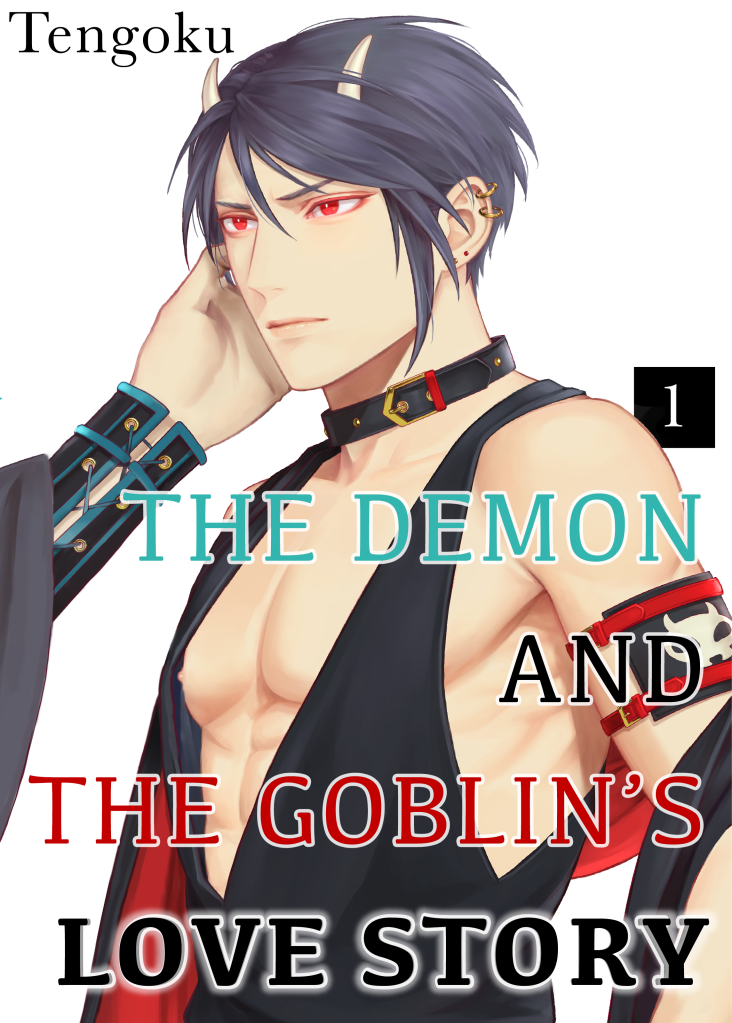
Kurama, a goblin and guardian of the mountain, simply wants to maintain the beauty and peace of his home. One day, he stumbles into the abode of an intimidating gang of demons who have moved to the mountain, and quickly finds out they’re not as scary as they seem. In addition, he is struck by the beauty and kindness of their leader, Hijiri, and falls in love at first sight. But that night, as he’s patrolling the mountain and reveling in the bliss of his newfound crush, he spots his “pure and gorgeous” Hijiri getting railed by another member of his gang. Heartbroken but undeterred, Kurama decides to shoot his shot with the sexy demon, but is Hijiri ready to embrace his feelings…?
(As a personal recommendation note, the demon bottom is basically the BL embodiment of the Big Tiddy Goth GF meme and I cannot get enough of him 

 He wears BLACK NAIL POLISH, I TELL YOU.)
“Momotarou’s Brutal Punishment” by Merino

Legendary author of the “Reamed on Livestream” series Merino is back at it again, this time with a new — and very unique — take on the famous Japanese legend of Momotarou, the boy born from a peach. In this BL iteration of the brave children’s story hero, Momotarou is a hedonistic and sadistic playboy who can’t be assed to do much of anything but is extremely horny all the time. Alongside him you’ll also find all the familiar characters from the classic tale, such as Momotarou’s dog, monkey, and pheasant companions, and of course the demons of Demon Island — one of which Momotarou sets his sights on, and proceeds to torture in every kinky way you can imagine. If a tanned tsundere ogre in a tank top and shorts being tied up, humiliated, and ravaged from all directions by the king of DGAF (unless fucking is involved) sounds up your alley, be sure to check it out.
“My Raw Love Life With A Male Demon” by Yusatona

Hot and stylish, this is all about the star-crossed romance between a demon and a human, narrated with tons of sexiness and humor. The Onigami Shrine is dedicated to the worship of demons, who access the physical world through a sacred tree and protect the local human community. Higure, the son of the family tasked with protecting the shrine, is up for a surprise when he turns eighteen, as the sky darkens, thunder booms, and a young demon appears in front of him with a proposal—to make Higure his wife! Well, thing is, Higure does want to get married to Kouen, the demon he had met in childhood and has been in love with ever since, but… not quite the way Kouen had in mind. In an art-style and character designs similar to shonen manga (unsurprisingly, as Yusatona is a huge fan of my own favorite Boku no Hero Academia, if their second Twitter is any proof) , this story is definitely recommended as a first foray into spicy BL; the folklore underlining the plot is an added bonus. All the demons featured are fleshed-out with entertaining personalities, which makes me hope we could see more of them… but the series seems to be at an indefinite hiatus on chapter 3. *sniff* Still, for a quick and easy fix of steamy BL, Yusatona’s human x oni couple’s got you covered.
Links, links, links:
Yusatona’s professional Twitter
Skeb (commission website)
Pixiv
 rentaBLog