From Japan’s やおい論争 (Yaoi Ronso, or Yaoi Debates) to the online discourse of today, the most common question surrounding BL in media and social criticism is “what is BL’s place in the larger sphere of LGBTQ media?” Does it belong there at all? Is it a genre that, while revolving around MLM, remains entirely separate from LGBTQ culture? Does it mostly being written by and for (supposedly) straight cis women fully disengage it from being LGBTQ? Is BL a force for good, or does it only exist to promote stereotypes of queer men? And what about BL’s treatment of women? Which supersedes the other: the queer men who’re uncomfortable with the content in some BL, or the fans who use BL as a reprieve from the stifling nature of the heteronormative media landscape? Or is BL, in itself, heteronormative?
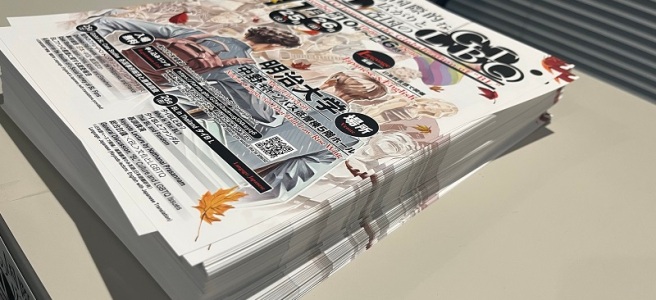
Those are just a handful of the questions discussed at the Meiji University symposium “BLの国際的な広がりと名国のLGBTQ,” or “LGBTQ Issues and the Globalization of ‘BL’.” Hosted by around twenty scholars, academics, fans, and community members from around the world, this symposium aimed to share research around how global queer communities interact with and shape BL in their own image post-import.
First, a little background. Taking place on November 25th and 26th, the event was hosted at Meiji University, which is often at the forefront of manga studies and research in Japan. The actual lectures were held at the Nakano campus, which just seemed right considering Nakano is also home to Nakano Broadway, a huge multi-level otaku hub for used manga, doujinshi, and goods. It’s been years since I was personally on a university campus and, being a huge nerd (I probably would have tried for my graduate degree if I hadn’t landed my dream job), I was pretty excited to feel those academic vibes again. Especially since the temps recently finally took a turn in Tokyo, so not only was it academic vibes, but cold weather, fall leaves, grab-a-huge-ass-coffee-before-class vibes. The perfect atmosphere to nerd out about BL manga for two days straight. (And get paid for it… 😏 I love my job.)
The few times I’ve had the joy of reading people’s opinions on Renta!, there’s been a continuing theme: the weird titles. Whether people find them annoying or funny, Renta!’s titles seem to have become an inseparable part of our branding within the BL fandom. So I thought I would talk about why Renta!’s titles sometimes look the way they do, why those changes occur, and the overall culture pressuring us to handle our titles this way.
First, I want to talk about the general manga titling culture in Japan as of late. As discerning eyes may have noticed, manga titles keep getting longer and longer and longer, and more and more… err… upfront (?) about the manga’s themes. “I Was A Struggling Office Worker But Now I’ve Been Reincarnated As The Rich Mean Villainess But I’ve Decided To Go Against My Fate!” etc. I’m sure we’ve all seen them. This is a naming dynamic I like to refer to as “hyper-meta titling,” and it’s been popular in Japan for the last five or so years. I’m not sure what initially caused this trend (that would be its own interesting rabbit hole, and perhaps a blog post for another day), but it means these titles are already quite long and weird in Japanese, and often get even longer and weirder during translation. You also see them semi-frequently in BL, in the direction of “I Met A Hot Guy At The Gym And Now We’re Friends With Benefits and I Want to Lick His Nipples” (not a real title… unfortunately), etc.
But those aren’t the titles I want to talk about with this post. Instead, I want to talk about adult content, SEO, and the pinch of an increasingly anti-porn culture in the West.
Damn. Sounds a lot less sexy now, huh?
For those who don’t work in fields that have a significant online presence and this is thus something you never have to think about (lucky you!), SEO stands for “search engine optimization.” You might hear your favorite influencers discussing it sometimes in terms of using the best words and phrases to get clicks—things that are currently trending, or are consistently popular. In the case of this blog, for instance, we’d want to include a lot of BL-, manga- and otaku-related phrases, keywords, full titles in a variety of spellings (English, romaji, and Japanese), etc. in order to help the right audience find our content.
However, in the past ten or so years and for a variety of reasons (some incredibly valid—we don’t want children stumbling across our content, obviously—and some a little… uh… less so), the overlords who have the most sway over the internet have cranked the breaks on SEO when it comes to adult content. Any words generally seen as sexual or pornographic in nature can get your site flagged and pushed pages and pages into the search results, even if your content is exactly what’s being sought out. The same has been happening with social media sites—I’m sure you all remember the Tumblr apocalypse where the site banned porn (and gave birth to the wonderful phrase “female-presenting nipples”) and subsequently lost half their users within the next few years. Twitter, too, has been recently cracking down and issuing shadow bans on adult content—i get hit with a “sensitive content” slap pretty frequently.
(But we keep trucking, because Twitter is all we have left… 🙃)
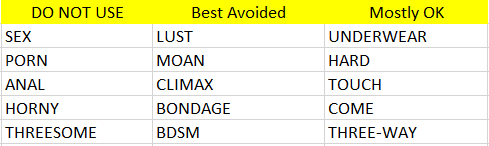
Renta! actually has entire lists of phrases we can’t use in our titles and synopses specifically because they’re incredibly damaging to SEO. Because I don’t want to severely damage the SEO for our blog, I’ll post a little image here:
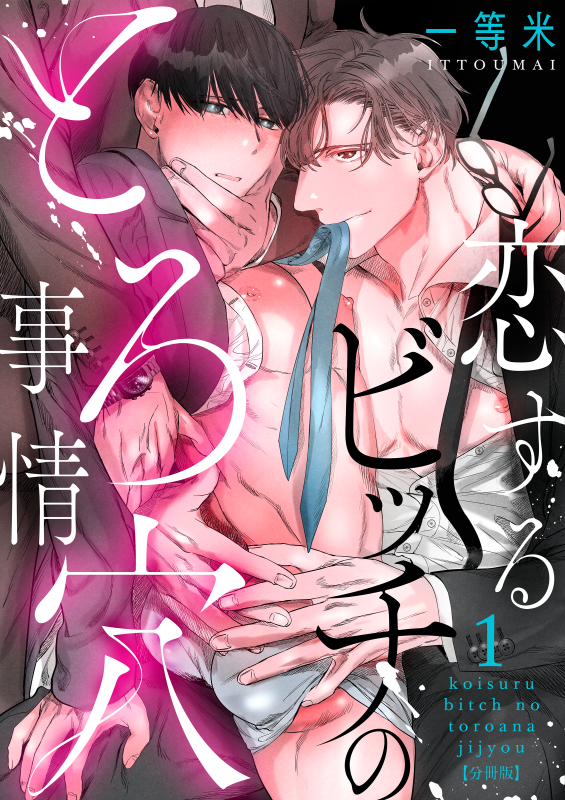
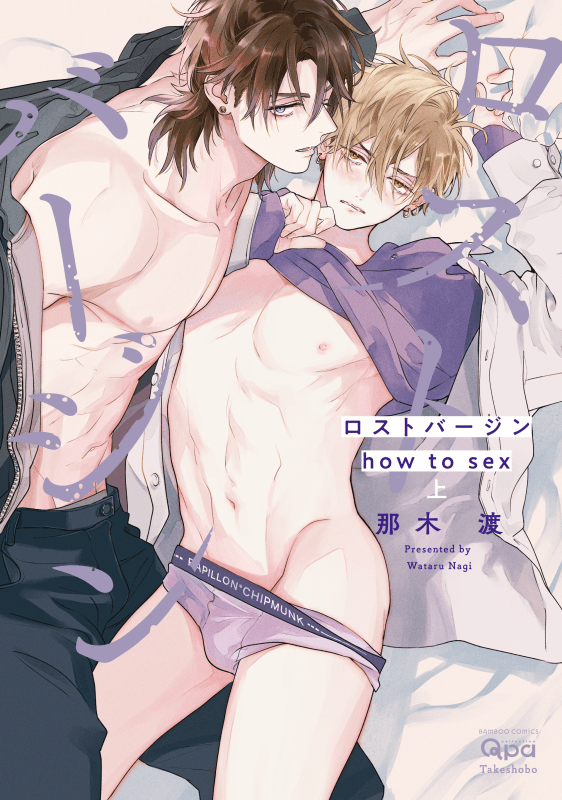
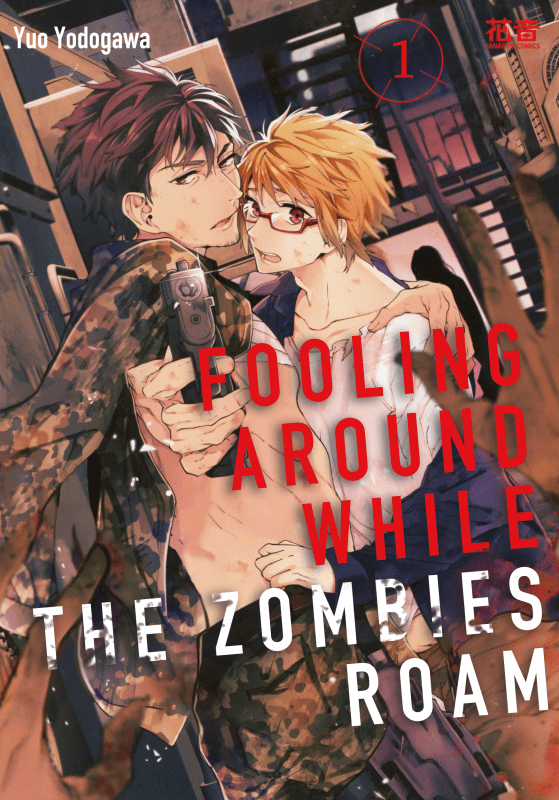
However, as has already been established, Japanese artists and publishers as of late love being particularly blunt in their titles, particularly when it comes to porn. So a title like ZOMBIE HIDE SEX (ゾンビ・ハイド・セックス) has to become… Fooling Around While The Zombies Roam. My Love Story as a Slut with a Wet, Needy Hole (恋するビッチのとろ穴事情) becomes A Hole Craving to be Touched. Lost Virgin: how to sex (ロストバージン how to sex) becomes Lost And Undefiled: Lessons in Sensuality. The titles essentially have the same meaning, but using safe, clean words. Using “safe, clean words” can make it feel kind of bizarre, however…
We do our best to retain titles that still convey the Japanese (and the content of the manga itself) while also skirting the regulations on adult content for SEO (and, more recently as you may have read from the issues with DLsite, credit card companies).
And I know what you’re thinking. “But Ames…” you’re about to say with a furrowed brow. “You guys have TONS of stuff on your site that uses those words…” We do. And the answer is simple: those aren’t localized by us. While we also localize lots and lots of great content, we also host lots of content localized by our wonderful partners. (This is what the “Localized by:” tag on the product details means!)
On the one hand, we could take a page out of their book and translate the titles more literally, since there’s a possibility having any of those words on our site removes us from the running in the SEO race, so why not just go ham? But we hope that offsetting it at least a little with our own titles can help the anti-porn situation much of the West has gotten itself stuck in. Also, in line with all the other crack-downs on on adult content, having sexual words in the title makes it impossible to advertise the series in any big way. Womp womp.
Localizing content from a highly porn-positive culture like Japan (though, with strict censorship laws… the contradictions are confusing) for fairly anti-porn cultures in the West comes with a lot of strange, unexpected hurdles (and many an explanation to our JP staff on why we can and can’t do things the same way they’d be done in Japan). But, for us it’s worth it if we can continue bringing the wonderful content we love to an even wider audience. We hope to continue sharing lots more bizarre, silly, cute titles with you in the future, so I hope you all look forward to it!
What are some of your favorite silly Renta! titles? I’d love to hear them on the comments or on Twitter! 🤗
J.GARDEN didn’t start until 11AM, but the thing you learn fast with attending events is that you have to get there early. While the staff try to make it fair by holding lottos and raffles to randomize how and when people enter the venue regardless of when you actually show up, etc. you still get there early. There are more than 13 million people living in Tokyo, and even if just a small fraction of them care enough about original BL to want to attend J.GARDEN, you want to up the odds of getting in and getting the books you want as much as you humanly can.
There’s a reason many otaku refer to event days as “war”—you need to go in with a game plan, or you’re going to lose. And Sou and I were already at a rough start, because we’d missed the chance to pick up a pamphlet on pre-order. They’d sold out within the first four days of release, and we hadn’t been given the okay to attend until the fifth day. So we were kind of screwed. Nonetheless, we did what we could with what we had—which was Twitter’s #J庭54 hashtag, the official J.GARDEN site, and tons of passion for BL—and decided we’d torture ourselves getting up at 5AM day-of, come down early, get a pamphlet, and do our best to plan in the time between obtaining it and when doors opened.
J.GARDEN was this past Sunday here in Tokyo, and our boss was kind enough to let us go as a work exploration!
What is J.GARDEN, you ask? Often shortened to J庭, or J-niwa—the Japanese word for garden, unsurprisingly—J.GARDEN is the twice-yearly original-only BL doujinshi event! It happens in the fall and spring, and has grown out of its original hall to house over 1000 tables. According to the J.GARDEN website, the event started in 1996 and has been going strong ever since, with this past Sunday’s being the 54th event, and the 55th already deep into the planning stages. (If you’re a long-time fan of BL manga and its deep lore, I highly recommend checking out all the past flyer and pamphlet art on the J.GARDEN history page. Truly stunning testament to the popular mangaka and art styles of the different time periods.)
J.GARDEN used to take place in the exhibition hall at Ikebukuro’s Sunshine City. For those who don’t know, Ikebukuro is a very important place to fujoshi, as it’s also the home of Otome Road. We hope to do a long-form explanation of Otome Road at some point, but until then, here‘s the Wikipedia article explaining it. The tl;dr is that there are many stores, restaurants, event halls, etc. in a very small stretch of Tokyo dedicated to female otaku, and is often seen as “Akihabara ~for her~” (though there are actually many male BL and otome fans who openly visit these places as well). In more recent years, however, J.GARDEN has been held exclusively at Tokyo Big Sight—an incredibly important otaku landmark some of you may know from tales of Comiket.
J.GARDEN is interesting because it’s a mix of old and new, big names and small fish, from all walks of life. There may be artists as huge and famous as Fumi Yoshinaga, but your favorite book purchased at the event may well be by someone you’ve never heard of before that you bought on a whim. It’s a chance for fans and creators to meet, and just be in a huge hall with others who sincerely love original BL.
While we plan on releasing a full report on our J.GARDEN experience later in the week, for now I interviewed a friend who has attended and participated in multiple J.GARDEN events and hopes to break into the original BL market. For those interested in the indie sector of BL, and what it’s like as a fan and a foreigner to make moves in the Japanese BL industry, please read on!
As you may have seen from my posts, I like to sprinkle in a lot of Japanese to help people learn and contextualize the language and culture a majority of Renta!’s content comes from. While we’re a localization company, I know a lot of people who read manga do intend on eventually learning and hopefully mastering Japanese someday, whether it’s in order to not have to rely on English licenses to get that sweet, sweet content, or even just to be able to comfortably follow Japanese mangaka, publishers, or fan accounts, and it can be helpful to learn bit by bit through your hobbies.
Still in the process of my own Japanese-learning journey (I think most language learning never actually ends, honestly—even in your native language), after living in Japan for four and a half years I’ve found there are a lot of words that’re hard to know without specifically taking part in the cultures surrounding them. The same way, say, Dungeons & Dragons or Genshin or even sports fanbases have their own vocabulary and phrases that don’t make a lot of sense outside their core community, being a nerd in Japan has its own language that can be a bit difficult to grasp for those who aren’t steeped in the culture.
A lot of these words take place within 推し活 (oshikatsu, a word that’s hard to translate but is essentially “oshi life”)—the words people use to talk about their favorite characters, idols, artists, etc. The word oshikatsu is a portmanteau (the Japanese language loves a good portmanteau) of 推し (oshi, or fav, bias, etc.) and 活動 (katsudou, activities), so essentially the activities and lifestyle of having an oshi. People who already take part in online or in-person Japanese otaku events likely already know this world well—the world otaku allow themselves to fall into once they’ve finished the dull slog of everyday life. The real world might suck, but at least we have oshikatsu to unwind to and enjoy with friends.
It’s actually such a common word at this point that it’s not rare to walk in to very average or trendy stores and see an oshikatsu section filled with colorful nui clothes, things to make uchiwa, or even just pouches and accessories in colors that are common signifiers of your fav idol or character. (For instance, my favorite character from Genshin is Xiao, so I tend to buy a lot of thing in the teals, greens, and soft purples that make up his color palette.) Trendy bakeries, cake shops, etc.—living an otaku lifestyle is very common and normal, and it’s not rare at all seeing stores and brands catering to it.
Nonetheless, there are still a lot of words that are so highly specific to actually living oshikatsu, otakatsu (“otaku life”), or BLkatsu (“BL life”) so I’ll introduce some of those words here. (Using Genshin characters and ships for many of my examples, since those are the names I know best lol.)
“Don’t Google yourself.” It’s common knowledge among celebrities, big and small, that it’s not a good idea to go searching for other people’s opinions of you or your work—especially not on the internet, where people can be particularly brutal behind the veil of anonymity. However, what if you googled yourself, and rather than finding criticism or bashing, you found something else? Say, for instance, art and stories of you getting pounded by your coworker?
Smalltime idols Homeroom—or H.R., with the H standing for Hibiki and the R standing for Rui—are two school friends who tried out to become idols in high school, and for five years they’ve grown into entertainers who’re tied together in both their personal and professional lives. This is a fact that hasn’t gone over the fans’ heads—in fact, there’s a whole faction of their fanbase (a majority of it, really) that’s quite keen on just how close the two are.
Hibiki isn’t sure what to expect when one of his drama costars Haruna tells him, “Hey! I searched ‘hibirui’ and found something interesting! Look it up with Rui♥” Rui tries to make him stop, terrified by the mean people on the internet, and initially he’s proven right when they stumble on a password-locked site with the description “concerned parties do not look.” The passwords are easy for the two to get past, considering it’s trivia about their entire career, but rather than a hate site shitting on them… it’s a fan-art site… filled with illustrations of them having sex…?
In the age of the internet, it’s easier than ever to connect with people who share the same interests as you — you can collectively squeal over your favorite series on social media, share your fanwork creations with other fans, and stream video and gaming to share real-time reactions. However, there’s still something to be said about the unique atmosphere of a convention, where people travel from all over just to revel in their shared love of a certain thing.
This past weekend, I attended the very first Citrus Con — a weekend-long BL-centered event that combines the convenience of online interaction with the sense of close community provided by good old-fashioned fan conventions.










 rentaBLog