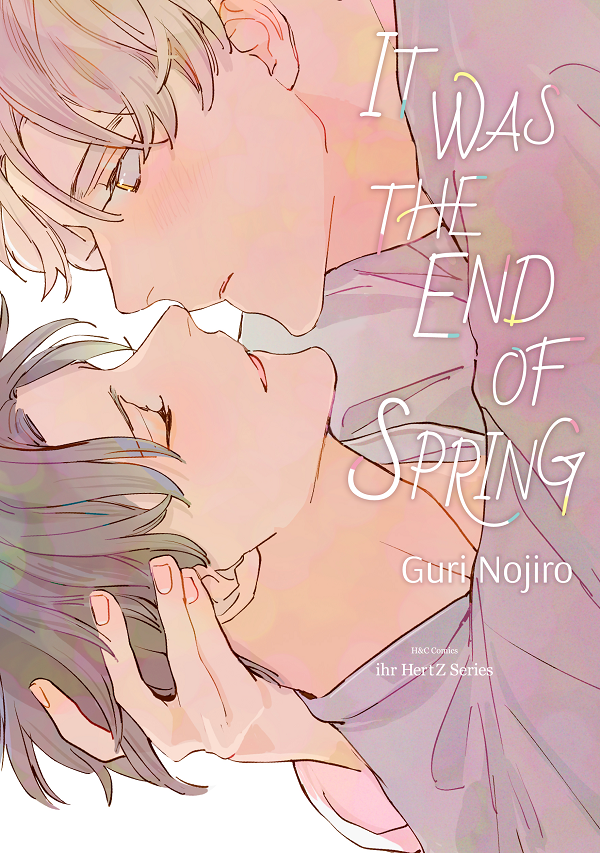
Read on Renta!:
It Was The End Of Spring by Guri Nojiro
Japanese:
Sore wa Haru no Owari ni
それは春の終わりに
Links:
Guri Nojiro Twitter
Taiyoh Tosho Twitter
Taiyoh Tosho Official Site
Have you ever had one of those moments where you think about all the people around you, and you just feel different? Everyone else feels such strong emotions, gets attached to people and things and ideas, laughs loudly and shouts in excitement and yells when they’re angry. But, not you. You’ve never felt anything that big before—nothing in the world has ever moved you or made you possessive or made you yearn for something more. But what if something—or someone—could show up in your life and teach you what it feels like to truly desire something, to feel frustration and sadness and longing?
That’s the main premise behind Guri Nojiro’s It Was The End Of Spring. Released in early 2021 as Nojiro’s first ever compiled commercial work, It Was The End Of Spring has all the characteristics of a Guri Nojiro manga—stunning, soft linework, gentle and realistic characters, and a penchant for slow-paced, warm storytelling mixed with occasional humor and bittersweet emotion.
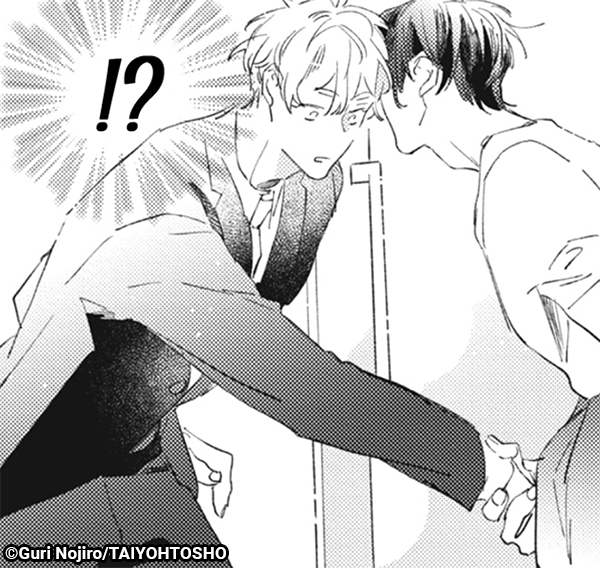
The story revolves around Haru Amakawa, a young man in his early twenties who’s lived in an “eternal spring”—he’s never felt much for strong emotion. Every day is calm and easy. He accepts everyone who approaches him, lets go of anyone who leaves, and has never felt particularly interested in other people. He’s kind, but he’s distant—not intentionally, but just because he doesn’t know what it feels like to want to get to know other people. So, when he’s transferred to a new office after two years on the job, he doesn’t seem to have any strong feelings about it.
It’s in this new office, though, that he meets Seiji Nakahara. Nakahara is in his mid-thirties, and has a cat-like allure. He likes to flirt and he’s not afraid to get close as long as you allow him to pull away as soon as he loses interest or feels cornered. Amakawa finds himself drawn to Nakahara in ways he’s never experienced before, and for reasons he doesn’t entirely understand. He gets flustered when Nakahara approaches him, and feels sad when Nakahara isn’t around or ignores him.
When he approaches his neighbor Ryoji to talk about these strange feelings, Ryoji informs him that this is clearly love. How is Amakawa supposed to believe that, though? Isn’t love supposed to be flowers and rainbows and happiness? All he feels when he’s around Nakahara is unsure and anxious and shy. But, regardless of these feelings, he’s desperate to get closer to the older man.
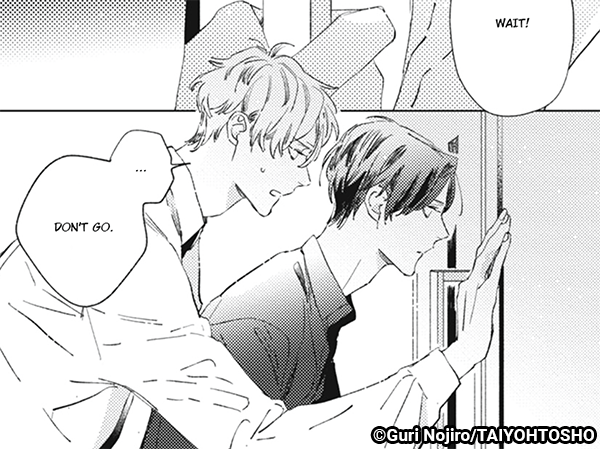
So, when he overhears Nakahara telling his office friend Matsuda that he intends to continue avoiding Amakawa specifically because their attraction appears to be mutual, Amakawa doesn’t even give himself time to think before stepping in. He doesn’t mind being toyed with by the older man if they can be together, if even just on a surface level. He wants Nakahara.
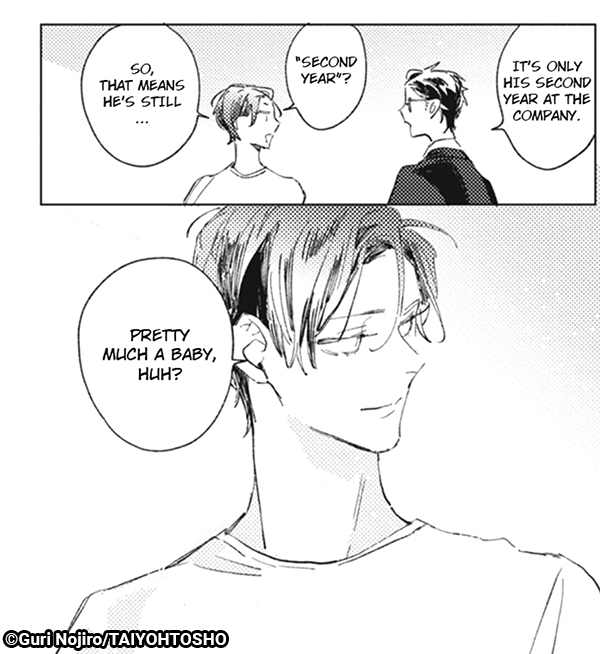
For me, one of the major appeals of this manga is that Amakawa and Nakahara are two sides of the same coin—in fact, since they’re cut from the same cloth, Nakahara senses and sees through Amakawa’s façade of kindness from the very beginning. When Matsuda talks about what a nice boy Amakawa is, and how Nakahara’d better not mess around with him, Nakahara is like “is he really all that nice, though?” The reality is that it’s hurtful to the people around Amakawa that he doesn’t actually care deeply about them all while showing them kindness and giving them hope that he’ll let them in—whether it’s done intentionally or not. Nakahara is similar in that he also keeps a distance from others, but with him it’s fully intentional and he’s very open about it. He draws a clear boundary with Amakawa from the very start, making it clear that he’s more than happy to fool around but otherwise sees Amakawa as an inexperienced “kid.”
While Amakawa’s initial resistance is to “knowing” those around him, Nakahara resists “being known.” Nojiro never goes too deeply into his past, but it’s clear he has reason to not let others in and to fear abandonment—even with Amakawa’s tenderness, he’s terrified to show his true self until he’s reassured Amakawa won’t leave him. When he feels like he can treat the relationship as a light fling he’s more than happy to invite Amakawa into his bed, but when he realizes he naturally drops his defenses with Amakawa he gets scared and pulls away. Thankfully, the same way Nakahara saw through Amakawa’s façade, Amakawa is able to see through Nakahara’s—knowing exactly when to pull away a bit and give Nakahara space to regulate his emotions (and realize how much he misses Amakawa’s warmth).

All of which to say it’s through their relationship with each other that they learn how wonderful it can feel to deeply know another person, and to let them know you—that even with the insecurity and anxiety that comes with letting someone in, loving someone and letting them love you, maybe that’s more rewarding than the peace of an eternal spring could ever be.
Which is what I really love about this manga. I feel like this is a struggle almost everyone can relate to, and it thoroughly humanizes Amakawa and Nakahara in the best ways. It’s so wonderful watching them finally begin to be themselves around each other—Nakahara with his inability to stand mornings, and Amakawa with his occasional childishness. Seeing the two of them together, you can’t help but feel like their relationship is going to help both of them become fuller, happier people. There’s nothing more you could ask for in a relationship.
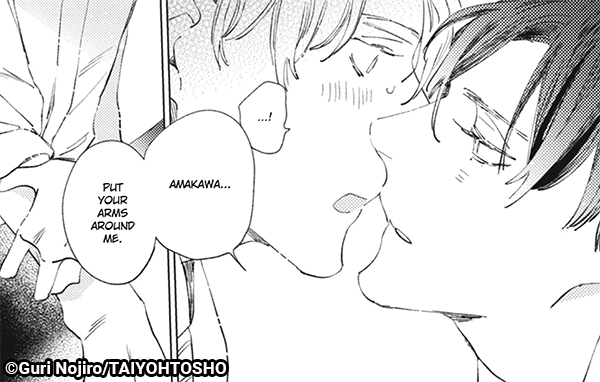
As you can probably tell from the description thus far, this is definitely a more story-centric BL. Much of the eroticism of this book is about yearning and sensuality—stolen kisses, gentle caresses, pleasing your beloved partner and seeing them squirm. While Nojiro’s ero scenes are fairly explicit, there’s a wonderful artfulness to them that leaves the reader feeling breathless. (It helps, of course, that Nojiro’s characters are always stunningly beautiful, supported by her airy, soft art style.)
Overall, I can see why this book cemented Guri Nojiro’s place in the BL landscape—it’s a beautiful, emotional ride without feeling too heavy or dark, centered around very real characters that are dealing with issues many people will find extremely relatable. As someone who’s read (and owns) a majority of Guri Nojiro’s bibliography, she hasn’t been in the commercial BL scene as long as some other artists, but she’s truly made her mark. I can’t wait to see what she releases next!


 rentaBLog
One thought on “Discovering Passion: Guri Nojiro’s “It Was The End Of Spring””