For those who have been following our BLog for a while, you’re probably well-acquainted with my beautiful colleagues Ames and Sou, who have been central on the BL Team here at Renta! I, on the other hand, only joined the team last summer, so some of you may have not seen me around quite yet (unless you were at Citrus Con 2025…!).
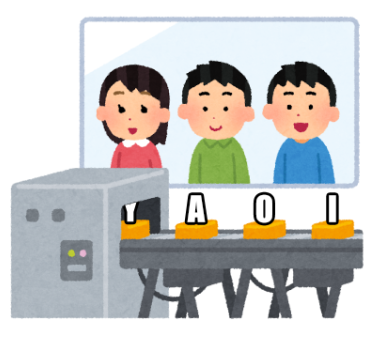
Before coming to Renta!, while I had done on-and-off freelance translation, my career was in a completely different field. Therefore, despite having been a BL fan for a while, there were so many things I’ve learned on the job. Now with my first year of working at the Yaoi Factory (™️heh) under my belt, I figured this would be a good time to recap what my experience has been like. Compared to many people on our team, I’m still a newbie, but I feel like I’ve gotten a grasp of the basics related to localization, manga platforms, and the Japanese working culture. And, since many of our users are interested in the industry, why not share my experience with you all?
So, without further ado, here are the five things I learned during my first year at Renta! Of course, these are all from my personal point of view, so please don’t come after me if you don’t completely agree😅
#1 “What’s the Context?”
Manga localization is a form of creative writing. So, many a time, there are multiple ways to translate and stylize dialogues and sound effects from manga. For example, the simple Japanese words うん can be translated into a variety of things, from the simple “Yeah” and “Uh-huh” to “I thought so” and the more contextual “I think so, too.” The right translation for things like this all depends on the context, character voice, and tone of the dialogue. Therefore, it’s essential for translators to be able to catch subtleties. And, pay special attention to sarcasm and any speech that is intended to be ironic!
In a similar vein, sound effects can vary a lot based on context. Take “とん とん” as an example. If this sound effect is accompanied by a scene of someone knocking on a door, I would translate it as a “knock knock.” However, if the said sound effect is used in a BL during a ~steamy~🥵 scene where the seme’s wonderful wand is hitting the uke’s magical spot with slight but not too much velocity, I would maybe go for a “thrust” or a “grind,” depending on what is depicted (and how).
Because the translation team is pretty collaborative, we often ask for each other’s opinions on how certain words should be translated. When that happens, 9 out of 10 times, someone asks, “What’s the context?” to see the page in question. We ask that to better help our team members, and CERTAINLY not just so that we can see the beautiful illustration of the seme and/or uke…👀
#2 Permissions, permissions, permissions.
Working with manga comes with countless interactions with publishers. After all, we are working with the characters, stories, and art of many mangaka who put time and effort into their creations! This means if we want to request to produce an English version of manga, we need a green light from the publisher. If we need to use images or screenshots from the manga to post on our social media, BLog, or convention panels, most of the time, we (or someone from the department) need to reach out to the publisher for approval. This process ensures that 1) we don’t infringe on copyright regulations, and 2) publishers can make sure their mangaka’s work isn’t being used in a way that they think is not appropriate. And, at times, they can also have a say in when and how we make announcements and/or communicate regarding the translated version of their manga.

The specific rules surrounding licensing, the use of images, and communication differ from publisher to publisher. For example, Renta! has pretty good relationships with a couple publishers who let us localize any work from their catalogue, while other publishers consider licensing on a title-by-title basis (for those interested in licensing and publisher relations, check out Ames’s posts on KiR Comics and Brite Publishing). Some publishers are more strict with how and where inside images of manga get used, while others are a little more flexible. This means that we need to plan posts and mangaka features WAY in advance, just in case we get a request from publishers to modify how images are cropped, etc.
#3 It’s not punny.
Puns are our archnemesis. Whenever I come across a pun in a manga dialogue, I cry and break down internally. Ok, that’s a bit of an overly dramatic version of my reaction, but you get the point. Puns are complex enough when working in a single language, so finding one (or coming up with one) that also works in English becomes a huge challenge.
When my yaoi creative juices are flowing and I’m able to come up with a pun that fits the context, it gives me a boost of confidence and I get really excited for our readers to come across that speech bubble. Other times, I rely on my amazing team members, and we have a pun-generating contest over the work chat. However, sometimes, there just isn’t a solution—so what do we do in those cases?
Usually, we consider the purpose the pun serves for the particular scene or dialogue. Is the pun supposed to express a character’s confusion? Is it supposed to be a snide remark? A moment of playfulness? Did a character mishear something? Once we consider the purpose, we substitute in whatever speech that serves the same purpose of communication within that dialogue. Then, tweak it to fit the character voice and tone as needed, and voilà!
#4 “Otsukaresama-desu.”
This was a culture shock for me because prior to working at Renta!, I spent all of my adult working life in the U.S. One of the first things I noticed when working for a Japanese company is that, whenever you cross paths with someone in the hall, you say, “Otsukaresama-desu.” Whenever you type up a message to someone, you start out the message by typing, “Otsukaresama-desu” (although within the translation team here at Renta!, we abbreviate this formality in our work chat).
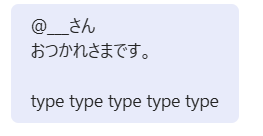
This is equivalent to saying “hey” in the American workplace. However, because the word is conjugated as a keigo—a style of language used to express politeness—personally, it feels more formal than a friendly “hey.” Sometimes, it feels a little TOO formal for my personal taste, but because respect and etiquette are part of the norm here, I always remind myself not to forget about this greeting. A similar cultural difference that I’ve spotted is starting out every email to those outside the company (such as publishers) with the Japanese equivalent of “This is ___ from Renta!”, even when you’re responding to the same sender in a chain of back-and-forth emails. Does it take time to type it out? Yes. Can you just skip it? No, unless you want to come across as rude to your clients or partners…
As someone who’s interested in languages and cultures, being able to experience firsthand a different norm of communication from the one I’m used to has been eye-opening. Working in Japan certainly requires an open mindset and an ability to adapt to different standards.
#5 No BL, No Life.

Working on the BL Team on the English side of Renta! has reaffirmed my love for BL manga. I still remember the very first BL I’ve read, which was Breathless Momentum by Zeniko Sumiya-sensei that I bought during a summer trip to Japan, and if you were to ask Yomogi back then if he’d ever be working on BL translation, he would chuckle and say, “In my dreams.”
But, lo and behold, I am currently living that dream. Every (week)day, I get to come into the office to read up on and translate heartwarming, funny, and spicy BL series. I get to look at beautiful artwork and dialogues that are out of this world and think about how best to convey the hues of emotions characters experience. I get to obsess over and spread my love for yandere stories, characters with thicc eyebrows, and art that mangaka post on their social media. I get to discuss with my teammates about current trends in the manga/BL industry, localization, and lettering. I get to contribute to the planning and execution of our mangaka interview collabs and exciting conventions, which let me interact with our beautiful fans (hey, that’s YOU!). So, I appreciate the opportunity I have, as well as the fans who support us!
Thank you so much for reading until the end! And with this, Yomogi, out👋

 rentaBLog