It’s the end of the year again, and for the hardcore otaku here in Japan, that means another Winter Comiket.

For the uninitiated, Comiket (short for Comic Market, コミックマーケット Komikku Maaketto in Japanese) is known as the largest fan convention worldwide, held twice a year (in the summer and winter) at Tokyo Big Sight. It’s famous for its gargantuan marketplace of doujinshi, or self-published comics — often created as fanart — catering to fans of nearly every side of manga and anime fandom imaginable. But the fun isn’t limited to indie works — you can find established pros and industry giants setting up shop here as well, often putting out exclusive merch just for Comiket attendees. Plus, it’s a major event in the cosplay sphere as well, so you can enjoy seeing your “favorite characters” walking around in real life all day! To learn more, and to get an inside look at the overall vibe of the event, you can check out this official English presentation prepared by the event organizers!
Perhaps you’re planning to attend this upcoming Comiket, or you dream of one day experiencing it for yourself and want to gear up with the essential knowledge beforehand. And so, as one geek lightly seasoned in attending fan events here in Japan, I’ve attempted to put together a little guide to help you out!
By the way, the tips here don’t apply only to Comiket, but smaller doujin events as well. I hope it’ll come in handy if you ever want to dip your toes in this unique part of otaku culture!
Basic Survival Tips
Arrive early (but not too early!)
It’s common knowledge among doujinshi event veterans that if you want to get your hands on a very sought-after book sold by a popular artist, you’ll have to do your darnedest to be one of the earliest to line up at their table, or risk them running out of stock before you even get the chance to buy it. Like many areas of Japanese society, doujinshi events are very orderly and operate on a first-come-first-served basis.
NOTE: Due to its massive scale, Comiket has its own system of entry, allowing people to enter the venue at different designated times, to prevent unmanageable crowds early in the day. Different events may have their own rules for entry, so checking the official website beforehand is always a good idea!
You may have heard of extra zealous fans camping outside the night before an event to secure their place at the front of the line, but know that this is generally not allowed by the con organizers and can be a public nuisance — let alone a safety hazard. Even for its earliest queueing time slot, Comiket allows coming by the first train of the day, but no earlier. And Comiket, being the BIGGEST doujinshi event there is, is an extreme case, so don’t think you have to rise before the sun every time you attend an event. For smaller to mid-sized events (so, everything that isn’t Comiket) I usually try to get there about 1-2 hours before the doors open — that gives me enough time to do any last-minute planning while I’m waiting in line, and gets me in the hall early enough to not miss out on snagging the books I want from my favorite creators!
Now, if you’re not too concerned about coming out on top in a Black Friday-esque battle with other fans for books and merch, and would rather avoid the large crowds, coming later in the day might be a good idea. Comiket recommends first-timers arrive at noon or later to avoid the biggest crowds.
But, if you’ve resigned yourself to your fate of waking up earlier than usual on the weekend so you can line up and get that ultra-rare novelty keychain from your favorite beastman yaoi artist, you’ll want to prepare yourself for the wait ahead.
Dress for the weather, and wear comfy shoes.
Comiket is held in both winter and summer, when the weather is at its most extreme at both ends of the spectrum. If you plan on lining up as early as it takes to secure your spot near the front of the entry line, be prepared to stand/sit outside the venue and be exposed to the elements for a good few hours. That means bundling up in layers, a warm coat, and preferably gloves and a hat in the winter, and applying plenty of sunscreen and dressing lightly but comfortably in the summer — with sunglasses and a parasol, if you have them. And of course, don’t forget to check the weather report the day of the event!
You’ll also want to wear comfortable walking shoes since you’ll likely be on your feet for the majority of the event. It’s cool to dress up in your most stylish outfit for the big day, but don’t sacrifice comfort for fashion — your feet will thank you!

Pack water and snacks.
In addition to phone batteries/chargers, your wallet/ID, and the ever-important protective plastic storage cases (or your receptacle of choice) to stash your precious doujinshi in, it’s important not to forget your basic needs amidst all the excitement. You’re likely in for a long day — or, in the case of smaller events such as Jgarden, a few short but very intense hours — of standing, walking, and generally burning your otaku energy off in various ways, so it’s important to stay hydrated and fueled! Tokyo Big Sight, as well as many other event venues in Japan, has no shortage of vending machines and nearby convenience stores and restaurants, but depending on crowd sizes, they may not be the most accessible sources of nourishment at all times of the day — so it’s best to come prepared with your own.
Come prepared with a map and list of tables you want to visit.
This isn’t really necessary if you’re not dead-set on any particular artists’ tables and are looking for a more casual browsing experience. But, if there are some books you absolutely must buy, it’s best to come prepared with a list of the artists’ tables you want to visit, ideally in the order of the ones you expect to sell out quickly (so, the more popular creators and basically every table located along the walls of each hall).
Every time I come to one of these events, I’m astonished by the quiet but fiery passion I can feel radiating from the people opening up their carefully marked table maps and making last-minute notes — it really looks like they’re gearing up for battle.
Of course, you can do all this digitally if you prefer. But I must say, one hot, hot summer Comiket, I ended up losing my phone amongst the massive swarms of people while waiting in line to enter — and thus all the lists and apps I’d used to keep track of the artists I wanted to visit. Luckily I was able to reunite with it at the Lost and Found at the end of the day, but the whole experience reminded me just why so many fans choose to organize everything the old-fashioned way.
Navigating the Venue
Listen to staff‘s directions.
Throughout the day, you’ll probably see many staff members walking around, shouting instructions to people in line and guiding crowds around the venue. They’ll likely make all these announcements in Japanese only, but in my experience, looking around and just following what everyone else is doing in response to them usually works out fine. If you get lost or need help, a staff member should never be too far away to flag down. They may seem stressed (they have to manage large crowds of impatient fans all day, after all) and they or may not speak English, so try to be polite and do your best to use any means of communication at your disposal (gestures, Google Translate, etc.).
Comiket thankfully has an International Desk expressly for the purpose of helping foreign attendees — check out the official page for more details, as well as other navigation tips for first-timers.
Wait your turn in line, and be mindful of your fellow attendees.
Once you’ve found the line for a table you want to visit, be prepared to wait patiently for the line to move along. “Saving spots” for friends or to hop out to use the bathroom isn’t allowed, so depending on the length of the line, it can be a bit of a time commitment (which is why you always want to hit your “first priority” artists first!).
It can get a bit confusing inside the venue, especially when it gets busy and lines start to overlap — so they end up getting split into multiple areas so as not to cut off foot traffic. If you’re not sure where the end of the line is, and you don’t want to accidentally end up cutting, look for people holding up signs with 最後尾 (saikoubi, “End of Line”) written on them. You can also ask a staff member, or just someone waiting in the line, “Saikoubi wa doko desu ka?” (“Where is the end of the line?”) to make sure.
Interacting with creators

Aisatsu (“greeting”) — Say hello!
One of the special benefits of attending in-person events is being able to meet your favorite content creators face-to-face. Online interaction is good too, but the human connection aspect is part of what has made doujinshi events flourish the way they have until today.
Though Japanese creators are said to be shy, most of them are thrilled to hear the impact their work has made on others — and are excited to geek out with people who are passionate about the same things as them. Even if you’re not confident in your Japanese speaking skills, or have to rely on simple English phrases, seeing their face light up at your words is always worth it!
Now, as excited as you may be to tell your favorite artist how much you love their work and how it’s changed your life, be careful to mind the length of your chat if it seems like a particularly busy time for their table (i.e., if there’s a long line of people behind you). Other fans might be anxious to hurry and buy their items so they can hurry off to their next table, and holding up the line for too long isn’t a good look. If you’re intent on having a more leisurely conversation with the artist, you can always come back to their table later when things slow down, and they’ll have more time to chat.
Bring your sashiire gifts (if the creator is comfortable with it) and fan letters!
Sashiire (literally, “supply of provisions/refreshments”), or small gifts given to creators by their fans, are a cornerstone of doujinshi culture. They’re essentially a way for fans to show their appreciation for the artists, and can be a nice gesture of thanks for all the joy their work brings you. It doesn’t need to be anything fancy — snacks such as sweets or senbei rice crackers are standard.
Before you go too wild planning your gift-giving, however, it might be a good idea to check each individual creator’s social media before the event to see if they have their own personal policy regarding these gifts. Bigger creators who anticipate a lot of fans wanting to give them sashiire especially might be more reluctant to accept them all (they’ll have to carry them all home somehow after all, and they don’t want good food to go to waste), and might have rules such as “Only accepting gifts from artist friends,” or “Fan letters only, please.”
Please note that homemade foods are generally a no-go for safety and sanitation reasons — and, because some artists travel long distances to attend events and may have a long trip home afterward, perishable items are best avoided. If you’re not sure where to go to get the perfect sashiire for your favorite creator, the lower levels of most shopping malls in Japan might be a good place to start; they’re usually full of shops dedicated to various “fancy” snacks perfect for gifting, starting at fairly affordable prices! A prepackaged souvenir from your home country could also be a nice surprise for the recipient.
Fan letters are almost universally welcomed, though. You can buy cute letter and stationery sets even at 100-yen shops to personalize your message. If you can write a little Japanese, it’s the perfect chance to use test out your skills to show them your love — even if it’s not perfect, or you have to rely on Google Translate, the creator will likely appreciate the effort!
Of course, none of this is required, so there’s no need to stress before the event about how you’ll be able to show adequate appreciation for each and every artist you adore — just showing up to buy their works is a sort of gesture of appreciation. But, if you have the time and wherewithal to put a little something together for your most beloved creators, it’s sure to mean a lot to them!
Cosplay Etiquette
Don’t show up in costume.
This may surprise fans in the U.S., where any given Denny’s or Starbucks near a convention center is sure to be crowded with colorful cosplayers on a con weekend, but in Japan wearing any sort of costume in public — without a good reason, of course — is a bit taboo.
Although doujinshi events are a hot spot for cosplayers, you usually have to register in advance to cosplay, and can only wear your costume in the designated areas. You also need to use the official changing rooms, and cannot show up to or leave the venue in your cosplay.
Ask for permission to take photos.
This may be a no-brainer, but it’s so important it bears repeating: cosplay is not consent, whether that be in regards to touching, hugging/“glomping,” or even just taking photographs of the person in costume.
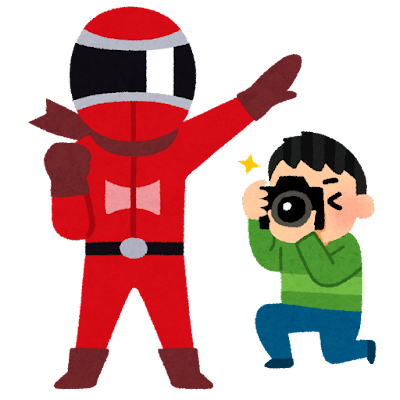

Japanese people are generally more shy about appearing on camera in public spaces, and careful about respecting others’ privacy when it comes to taking photos in public. “Sneak” photography — even if done with innocent intentions — is banned at these events (and heavily frowned upon in general), and in some cases even illegal.
Some cosplayers just come to vibe with their friends in costume and take photos for their own social media, so try to be understanding if not everyone’s open to having their picture taken. On the other hand, most of them are excited to be surrounded by other fans and will gladly take a picture with you, so don’t be afraid to ask! My go-to phrase to ask permission is “Shashin tottemo ii desu ka?” (If you forget this phrase, pointing to your phone and asking, “OK?” will probably get the message across  )
)
…And above all, have fun!
Amidst all the stress of planning your day and the stimulation of the crowded event hall, it can be easy to forget why people come to these events in the first place — to enjoy their hobby and connect with other fans of their shared interest!
To be honest, my very first Comiket was pretty overwhelming, and a little disappointing (due in no small part to my own lack of planning  ), but after learning the ropes a bit, I think I’m more able to enjoy these events to the fullest. Even now, Comiket’s a bit intimidating to me, and I only make the journey when there’s a book on offer that I absolutely must have, or an artist attending that I really want to meet. But, as a fan of anime, manga, and fanmade works, it’s fun to experience at least once — and it’s definitely a unique atmosphere, being surrounded by literally thousands of other fans coming together to enjoy their shared interests for this twice-a-year event, right in the homeland of otaku culture.
Have you ever been to an otaku event in Japan? Are you looking forward to attending one someday? Let us know in the comments, and have a great end to 2023!

 rentaBLog
3 thoughts on “A Beginner’s Guide to Japanese Doujinshi Events”